Healthcare remains one of the most important pillars of American society. Every day, millions of people rely on skilled professionals to diagnose illnesses, provide treatment, support recovery, and improve quality of life. Behind every successful patient outcome stands a network of healthcare workers whose expertise, dedication, and compassion make a measurable difference.
The demand for healthcare professionals continues to rise as the United States experiences an aging population, increased access to healthcare services, and growing awareness of preventive care. According to projections from the United States Bureau of Labor Statistics, healthcare occupations are expected to add significantly more jobs than most other industries during the coming decade. This combination of strong employment growth and societal impact makes healthcare an attractive field for students planning their future careers.
For many students, choosing among the most rewarding healthcare careers involves more than salary considerations. Meaningful patient interactions, professional fulfillment, career advancement opportunities, workplace stability, and the ability to contribute to public health all play important roles. The healthcare careers highlighted below consistently stand out because they combine strong earning potential with personal satisfaction and long term career prospects.
What Makes a Healthcare Career Rewarding?
A rewarding healthcare career typically combines several important factors. Financial stability is often one consideration, but it rarely tells the full story. Many healthcare professionals report that helping patients achieve better outcomes provides a sense of purpose that extends beyond compensation.
Several characteristics frequently define highly rewarding healthcare careers:
- Strong job security
- Competitive earning potential
- Positive impact on patients and communities
- Opportunities for specialization
- Continuous learning and professional growth
- High demand across the United States
- Meaningful daily responsibilities
Students evaluating healthcare professions should consider all these factors rather than focusing exclusively on salary rankings.
Healthcare Career Outlook in America
Healthcare employment continues to expand faster than many sectors of the economy. Several trends are driving this growth:
- Increasing life expectancy
- Rising prevalence of chronic diseases
- Growing healthcare access
- Advancements in medical technology
- Greater emphasis on preventive care
- Expanding mental health services
These developments are creating opportunities across clinical, diagnostic, therapeutic, and administrative healthcare roles.
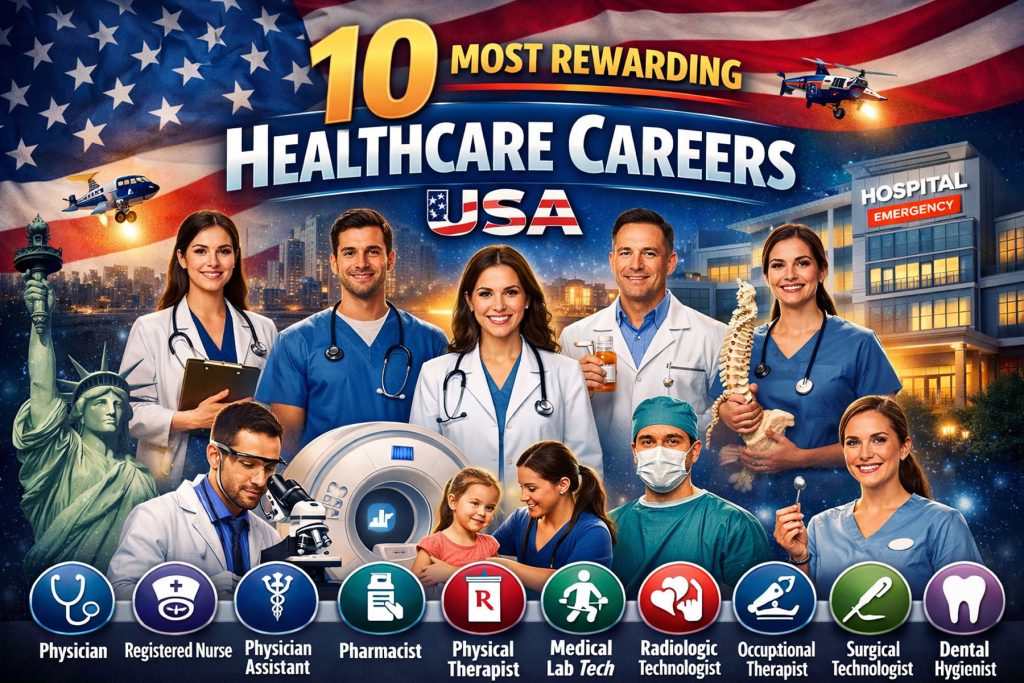
Top 10 Most Rewarding Healthcare Careers
1. Physician
Physicians remain among the most respected and rewarding professionals in healthcare. They diagnose illnesses, develop treatment plans, coordinate patient care, and often lead multidisciplinary medical teams.
The role demands extensive education and training, yet many physicians describe patient outcomes and clinical problem solving as deeply fulfilling aspects of their work.
Key benefits include:
- High earning potential
- Significant societal impact
- Wide range of specialties
- Leadership opportunities
- Strong job demand
Students interested in science, patient care, and lifelong learning often find medicine particularly rewarding.
2. Nurse Practitioner
Nurse practitioners have become increasingly important within the American healthcare system. These advanced practice registered nurses can assess patients, diagnose conditions, order tests, and provide treatment in many settings.
The profession offers an appealing balance between patient interaction, clinical autonomy, and career flexibility.
Reasons students are drawn to this career include:
- Strong employment growth
- Competitive salaries
- Expanded practice authority
- Direct patient relationships
- Diverse work environments
Many healthcare analysts view nurse practitioners as one of the fastest growing professions in America.
3. Physician Assistant
Physician assistants work closely with physicians while maintaining substantial responsibility for patient care. Their duties often include conducting examinations, diagnosing illnesses, developing treatment plans, and assisting with procedures.
This profession appeals to students seeking a clinical career with a shorter educational pathway than medical school.
Advantages include:
- Excellent job outlook
- Strong compensation
- Broad clinical exposure
- Flexibility across specialties
- Meaningful patient care responsibilities
Physician assistants frequently report high levels of career satisfaction due to the variety and impact of their work.
4. Physical Therapist
Physical therapists help patients regain mobility, reduce pain, and recover from injuries or medical conditions. Their work often transforms lives by restoring independence and improving physical function.
Whether helping athletes return to competition or assisting older adults after surgery, physical therapists witness tangible patient progress.
Common workplace settings include:
- Hospitals
- Rehabilitation centers
- Sports medicine clinics
- Outpatient facilities
- Home healthcare services
For students who enjoy movement science and patient interaction, physical therapy offers substantial professional fulfillment.
5. Pharmacist
Pharmacists play a vital role in medication management and patient safety. Their expertise helps ensure that treatments are both effective and appropriate.
Modern pharmacists frequently collaborate with physicians, nurses, and other healthcare professionals while counseling patients on medication use.
The profession remains rewarding because it combines:
- Scientific expertise
- Patient education
- Clinical decision making
- Healthcare collaboration
- Public health contributions
As medication therapies become increasingly sophisticated, pharmacists continue to serve as critical healthcare resources.
6. Occupational Therapist
Occupational therapists help individuals develop, recover, or maintain skills necessary for everyday living. Their patients may include children with developmental challenges, adults recovering from injuries, or older adults managing chronic conditions.
The profession focuses on improving independence and quality of life.
Areas of practice often include:
- Pediatric care
- Rehabilitation
- Mental health services
- Geriatric care
- Community health programs
Students interested in holistic patient care often find occupational therapy especially meaningful.
7. Registered Nurse
Registered nurses form the backbone of the American healthcare system. They provide direct patient care, coordinate treatment plans, monitor patient conditions, and educate families.
Nursing offers multiple pathways for advancement while providing opportunities to make a daily difference in patient outcomes.
Key strengths of the profession include:
- Consistent demand
- Numerous specialties
- Career mobility
- Leadership opportunities
- Strong community impact
From emergency departments to intensive care units, registered nurses play an essential role in healthcare delivery.
8. Clinical Psychologist
Mental health has become an increasingly important component of healthcare. Clinical psychologists assess, diagnose, and support individuals experiencing emotional, behavioral, or psychological challenges.
Growing public awareness of mental health needs has expanded opportunities within this profession.
Many practitioners find their work rewarding because it allows them to:
- Support long term patient improvement
- Address complex human challenges
- Contribute to community wellbeing
- Apply evidence based approaches
- Foster resilience and recovery
Mental health professionals continue to play a vital role in modern healthcare systems.
9. Speech Language Pathologist
Speech language pathologists evaluate and treat communication and swallowing disorders. Their work affects patients of all ages, from children developing language skills to adults recovering from neurological conditions.
Successes in this field often produce dramatic improvements in quality of life.
Professional responsibilities may involve:
- Speech therapy
- Language development
- Cognitive communication support
- Swallowing assessments
- Patient and family education
The ability to help individuals communicate effectively makes this profession particularly rewarding.
10. Healthcare Administrator
Not all rewarding healthcare careers involve direct patient treatment. Healthcare administrators oversee operations, strategy, budgeting, staffing, and regulatory compliance within healthcare organizations.
Their leadership directly influences patient experiences, organizational performance, and healthcare quality.
Benefits of the profession include:
- Leadership responsibilities
- Broad organizational impact
- Strong earning potential
- Career advancement opportunities
- Contribution to healthcare improvement
Students interested in management and healthcare systems often thrive in administrative roles.
Comparison Table of Rewarding Healthcare Careers
| Career | Typical Education Level | Job Growth Outlook | Patient Interaction | Career Reward Potential |
| Physician | Doctoral Professional Degree | Strong | Very High | Very High |
| Nurse Practitioner | Master’s or Doctoral Degree | Very Strong | Very High | Very High |
| Physician Assistant | Master’s Degree | Very Strong | High | Very High |
| Physical Therapist | Doctoral Degree | Strong | High | High |
| Pharmacist | Doctoral Degree | Moderate | Moderate | High |
| Occupational Therapist | Master’s Degree | Strong | High | High |
| Registered Nurse | Associate or Bachelor’s Degree | Strong | Very High | High |
| Clinical Psychologist | Doctoral Degree | Strong | High | High |
| Speech Language Pathologist | Master’s Degree | Strong | High | High |
| Healthcare Administrator | Bachelor’s or Master’s Degree | Strong | Moderate | High |
Skills Shared by Successful Healthcare Professionals
Academic excellence alone does not guarantee success in healthcare. Many of the most effective professionals share a combination of technical expertise and interpersonal abilities.
Communication
Clear communication helps healthcare workers explain complex information, coordinate care, and build patient trust.
Critical Thinking
Healthcare environments frequently involve complex situations requiring careful analysis and sound judgment.
Empathy
Patients often face uncertainty, stress, and difficult decisions. Compassionate communication can significantly improve patient experiences.
Adaptability
Healthcare continues to evolve through technological innovation, regulatory changes, and new treatment approaches.
Teamwork
Modern healthcare depends on collaboration among physicians, nurses, therapists, pharmacists, administrators, and support staff.
Educational Pathways Students Should Consider
Different healthcare careers require different educational commitments. Students should evaluate both their interests and long term goals before selecting a pathway.
Shorter educational routes may include:
- Registered Nursing
- Certain allied health professions
- Healthcare administration programs
Longer educational routes may include:
- Medicine
- Clinical psychology
- Pharmacy
- Physical therapy
The educational investment should be weighed alongside career goals, earning potential, and personal interests.
Why Healthcare Continues to Attract Students
Healthcare offers a unique combination of stability and purpose. While many industries experience rapid disruption, healthcare remains essential in every community across America.
Research consistently shows that meaningful work contributes significantly to career satisfaction. Healthcare professionals frequently witness the direct results of their efforts, whether helping a patient recover from surgery, supporting a child with developmental challenges, improving mental health outcomes, or enhancing quality of life for older adults.
Advances in medical technology, personalized medicine, telehealth services, and data driven healthcare are also creating new opportunities for innovation. Students entering healthcare today may contribute to breakthroughs that reshape patient care for future generations.
The Future of Rewarding Healthcare Careers
Healthcare careers are expected to remain among the most valuable and impactful professions in the United States for decades to come. Demographic changes, medical advancements, and evolving patient needs continue to expand opportunities across clinical and administrative disciplines.
Students seeking meaningful work often find healthcare uniquely positioned at the intersection of science, service, and human connection. Whether providing direct patient care, advancing mental health support, leading healthcare organizations, or helping individuals regain independence, professionals in these fields contribute to outcomes that matter deeply to individuals, families, and communities.
The most rewarding healthcare careers are not defined solely by salary or prestige. Their true value lies in the ability to improve lives while building a stable, respected, and intellectually engaging profession. For students across America, healthcare remains one of the strongest pathways toward both personal fulfillment and long term career success.
Frequently Asked Questions
What is the most rewarding healthcare career in the United States?
Rewarding experiences vary by individual goals and interests. Physicians, nurse practitioners, registered nurses, and physical therapists are often cited among the most fulfilling careers because they combine patient impact, professional respect, and strong compensation.
Which healthcare career has the fastest job growth?
Nurse practitioners are among the fastest growing healthcare professions. Demand continues to increase as healthcare systems seek expanded access to primary and specialty care.
Can students enter healthcare without attending medical school?
Yes. Many rewarding healthcare careers, including nursing, physical therapy, occupational therapy, speech language pathology, and healthcare administration, do not require medical school.
Which healthcare career offers the best work life balance?
Work life balance varies by employer, specialty, and location. Occupational therapists, speech language pathologists, and certain advanced practice nursing roles often provide flexible scheduling options.
Are healthcare careers financially rewarding?
Many healthcare professions offer strong earning potential compared with national averages. Compensation varies according to education, specialization, experience, and geographic region.
What healthcare career is best for helping people directly?
Physicians, nurses, physical therapists, occupational therapists, and speech language pathologists all provide direct patient care and often build meaningful relationships with those they serve.
Is healthcare a stable career field?
Healthcare is widely considered one of the most stable employment sectors in America. Demand for healthcare services remains consistent across economic cycles.
Which healthcare career requires the least education?
Educational requirements differ significantly. Registered nursing and certain allied health professions may offer shorter pathways compared with medicine, pharmacy, or clinical psychology.
Can international students pursue healthcare careers in the United States?
Many international students study healthcare related fields in the United States. Specific educational, licensing, and immigration requirements vary by profession.
What skills matter most for healthcare success?
Communication, critical thinking, empathy, adaptability, professionalism, and teamwork consistently rank among the most valuable skills across healthcare professions.