
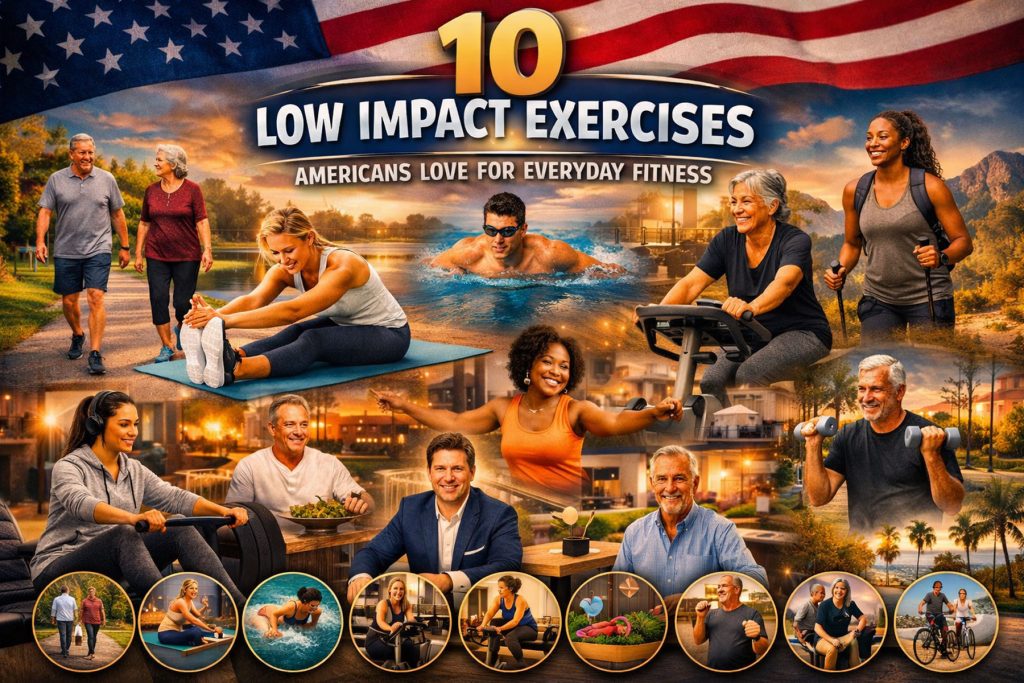
Physical fitness in the United States has evolved far beyond the traditional image of intense gym sessions and exhausting workouts. Millions of Americans now prioritize movement that can be sustained for years rather than weeks. The shift reflects a growing awareness that long term health depends on consistency, recovery, and joint friendly activity rather than maximum intensity alone.
Low impact exercises have become a central part of this movement. These activities place less stress on the joints while still delivering meaningful benefits for cardiovascular health, muscular strength, flexibility, balance, and overall wellness. They appeal to a wide audience, including young professionals, older adults, beginners, athletes recovering from strenuous training, and individuals looking for practical ways to stay active.
Research from organizations such as the Centers for Disease Control and Prevention and the American Heart Association consistently highlights the value of regular physical activity in reducing the risk of chronic disease, improving mental well being, and supporting healthy aging. Low impact exercises make those benefits accessible to more people by removing some of the physical barriers associated with high intensity training.
Why Low Impact Exercise Continues to Grow in Popularity
Fitness trends often come and go, yet low impact exercise has maintained steady growth because it addresses real world needs. Many Americans spend long hours sitting at desks, commuting, or working remotely. As a result, concerns about joint stiffness, back discomfort, and reduced mobility have become increasingly common.
Unlike activities that involve repeated jumping or hard landings, low impact movements reduce stress on the knees, hips, and ankles. This makes them suitable for a broader range of ages and fitness levels.
A study published in the British Journal of Sports Medicine found that regular physical activity is associated with a significantly lower risk of premature mortality. The findings reinforce a simple reality: consistent movement matters more than pursuing extreme exercise routines that are difficult to maintain.
The 10 Low Impact Exercises Americans Love
1. Walking
Walking remains the most popular form of exercise in the United States. It requires no special equipment beyond comfortable footwear and can be adapted to nearly any fitness level.
A brisk walk can elevate heart rate, improve cardiovascular endurance, and support weight management. Walking outdoors also provides psychological benefits. Research has linked time spent in green spaces with reduced stress and improved mood.
Many Americans incorporate walking into daily routines through neighborhood strolls, walking meetings, lunch break walks, or evening outings with family members.
2. Swimming
Swimming provides a full body workout while placing minimal pressure on joints. The buoyancy of water supports body weight, making movement easier for people who experience joint discomfort or mobility limitations.
Every major muscle group participates during swimming. At the same time, the cardiovascular system receives a challenging workout that can improve endurance and heart health.
Community pools, recreation centers, and aquatic fitness programs have helped make swimming a popular option across the country.
3. Cycling
Whether performed outdoors or on a stationary bike, cycling offers a highly effective low impact workout.
The circular pedaling motion reduces stress on weight bearing joints while strengthening the legs, glutes, and core. Cycling can also improve cardiovascular fitness and stamina.
Many American cities have expanded bike lanes and recreational cycling paths during the past decade, contributing to increased participation among adults seeking active transportation and recreation.
4. Yoga
Yoga combines controlled movement, flexibility training, balance work, and mindful breathing. It has become one of the most widely practiced wellness activities in the United States.
Regular yoga practice can improve mobility, posture, muscular endurance, and body awareness. Different styles allow participants to choose experiences ranging from gentle stretching sessions to more physically demanding flows.
Yoga’s accessibility contributes significantly to its popularity. Classes are available in gyms, studios, community centers, workplaces, and online platforms.
5. Elliptical Training
Elliptical machines are a staple in American fitness centers for good reason. They mimic natural walking or running motions while reducing impact forces on the joints.
Users can adjust resistance and intensity levels to match individual fitness goals. The inclusion of moving handlebars also engages the upper body, creating a more comprehensive workout experience.
For individuals seeking cardiovascular training without the repetitive impact associated with running, elliptical workouts offer an attractive alternative.
6. Rowing
Rowing machines have experienced a surge in popularity in recent years. The exercise combines cardiovascular conditioning with significant muscular engagement.
A properly executed rowing stroke activates the legs, back, shoulders, arms, and core. Because the movement occurs in a seated position, impact stress remains relatively low.
Fitness professionals often praise rowing for its efficiency. Few exercises challenge as many muscle groups simultaneously while remaining accessible to a broad population.
7. Pilates
Pilates emphasizes controlled movements, core strength, posture, and flexibility. Developed in the early twentieth century, it has gained widespread acceptance among fitness enthusiasts, rehabilitation specialists, and wellness professionals.
Pilates sessions often focus on movement quality rather than repetition volume. Participants build stability and muscular endurance through precise exercises that strengthen deep supporting muscles.
The method appeals to people seeking improved movement mechanics, balance, and body control.
8. Water Aerobics
Water aerobics combines traditional exercise movements with the resistance and support of water. The environment allows participants to challenge muscles while reducing joint stress.
Many community centers and fitness facilities offer water aerobics classes specifically designed for adults, seniors, and beginners.
The social aspect also contributes to its popularity. Group classes encourage accountability, motivation, and long term participation.
9. Tai Chi
Tai Chi originated as a martial art but is now widely recognized for its health and wellness benefits. The practice consists of slow, flowing movements coordinated with breathing and concentration.
Research has shown that Tai Chi may help improve balance, mobility, and overall physical function, particularly among older adults.
Its gentle nature makes it one of the most approachable exercise forms available. Participants can practice in parks, community centers, or at home with minimal space requirements.
10. Resistance Band Training
Resistance bands provide a versatile strength training option that places less stress on joints than many traditional weightlifting exercises.
The bands create continuous tension throughout movement patterns, helping strengthen muscles while improving stability and coordination.
Because they are affordable, portable, and adaptable, resistance bands have become increasingly popular among home fitness enthusiasts and travelers.
Comparing Popular Low Impact Exercises
| Exercise | Primary Benefit | Intensity Level | Equipment Needed |
| Walking | Cardiovascular health | Low to Moderate | Comfortable shoes |
| Swimming | Full body conditioning | Moderate | Pool access |
| Cycling | Endurance and leg strength | Moderate | Bicycle or stationary bike |
| Yoga | Flexibility and balance | Low to Moderate | Exercise mat |
| Elliptical Training | Cardio fitness | Moderate | Elliptical machine |
| Rowing | Strength and endurance | Moderate to High | Rowing machine |
| Pilates | Core strength | Low to Moderate | Mat or equipment |
| Water Aerobics | Joint friendly conditioning | Low to Moderate | Pool access |
| Tai Chi | Balance and mobility | Low | Open space |
| Resistance Bands | Strength development | Low to Moderate | Resistance bands |
Benefits Beyond Physical Fitness
The value of low impact exercise extends well beyond calorie expenditure or muscle development.
Better Joint Health
Joint related concerns affect millions of Americans each year. Low impact activities allow individuals to remain active while minimizing repetitive stress on vulnerable areas such as the knees and hips.
Improved Mental Well Being
Physical activity supports the release of chemicals associated with mood regulation and stress reduction. Consistent movement has been linked to lower levels of anxiety and improved emotional resilience.
Greater Exercise Consistency
One of the strongest predictors of long term fitness success is adherence. Low impact activities are often easier to maintain because they produce less soreness and require shorter recovery periods.
Healthy Aging Support
According to the CDC, regular physical activity helps older adults maintain independence, mobility, and quality of life. Low impact exercises offer practical pathways for staying active throughout the aging process.
Choosing the Right Low Impact Exercise
No single exercise works best for everyone. Personal preferences, physical condition, lifestyle demands, and fitness goals all influence the ideal choice.
Individuals seeking social interaction may enjoy water aerobics or group yoga classes. Those focused on cardiovascular health may gravitate toward walking, cycling, or swimming. People looking to build strength and stability often benefit from Pilates or resistance band training.
The most effective exercise is often the one that can be performed consistently over months and years. Enjoyment, convenience, and sustainability frequently matter more than chasing the latest fitness trend.
Building a Sustainable Fitness Routine
Fitness habits are built through repetition rather than intensity. A person who walks thirty minutes five times each week often achieves better long term results than someone who completes demanding workouts sporadically.
Combining multiple low impact activities can also provide variety while addressing different aspects of fitness. Walking for cardiovascular health, yoga for flexibility, and resistance band exercises for strength create a balanced approach that supports overall wellness.
As technology continues to make fitness resources more accessible through mobile applications, virtual classes, and wearable devices, low impact exercise is likely to remain a cornerstone of everyday fitness across the United States.
Final Thoughts
The growing popularity of low impact exercises reflects a broader shift in how Americans approach health and fitness. Rather than viewing exercise as a short term challenge, many people now see movement as a lifelong investment in physical capability, mental well being, and overall quality of life.
Walking, swimming, cycling, yoga, rowing, Pilates, Tai Chi, and other joint friendly activities demonstrate that effective exercise does not require punishing workouts or extreme effort. Consistent participation, gradual progress, and sustainable habits remain the foundations of lasting fitness success. As awareness of preventive health continues to grow, low impact exercise will likely remain one of the most practical and accessible ways for people to stay active, healthy, and engaged throughout every stage of life.
Frequently Asked Questions
What are low impact exercises?
Low impact exercises are activities that place minimal stress on the joints while still improving fitness. At least one foot typically remains in contact with the ground, or body weight is supported through water or equipment.
Are low impact workouts effective for weight management?
Yes. Low impact exercises can contribute to calorie expenditure and support healthy weight management when combined with consistent activity and balanced nutrition habits.
Which low impact exercise is best for beginners?
Walking is often considered one of the easiest starting points because it requires little equipment, minimal instruction, and can be adjusted to different fitness levels.
Can low impact exercises improve heart health?
Many low impact activities elevate heart rate and improve cardiovascular endurance. Walking, cycling, swimming, and rowing are particularly effective options.
Are low impact exercises suitable for older adults?
Yes. Many older adults choose low impact activities because they support mobility, balance, strength, and cardiovascular health while reducing joint stress.
How often should low impact exercises be performed?
Public health guidelines generally encourage regular physical activity throughout the week. Frequency and duration depend on individual fitness levels and goals.
Is yoga considered a low impact exercise?
Yes. Most forms of yoga qualify as low impact because they emphasize controlled movement, flexibility, balance, and strength without repetitive jumping.
Can low impact training build strength?
Absolutely. Resistance band training, Pilates, rowing, and certain forms of yoga can help develop muscular strength and endurance.
What equipment is needed for low impact workouts?
Many activities require very little equipment. Walking needs comfortable shoes, while yoga mats, resistance bands, bicycles, or pool access may be helpful depending on the activity.
Why are low impact exercises becoming more popular in America?
Growing awareness of joint health, sustainable fitness habits, healthy aging, and long term wellness has increased interest in exercise options that are effective yet accessible.