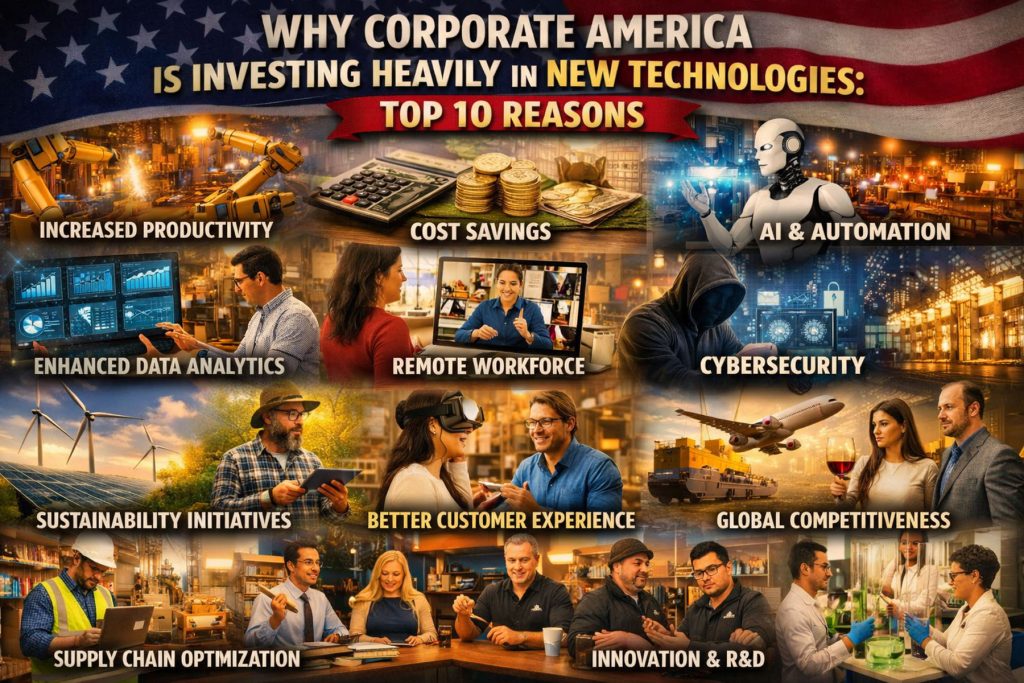

Key Insights at a Glance
- AI and technology continue reshaping multiple industries
- Healthcare and aging demographics are creating long-term demand
- Clean energy investment is accelerating nationwide
- Data, cybersecurity, and digital infrastructure remain critical
- Future opportunities increasingly favor adaptable skills
What if the next trillion-dollar opportunity isn’t in the industries dominating today—but in the ones quietly accelerating behind the scenes?
America’s economy is changing rapidly. Artificial intelligence is reshaping workplaces, healthcare demands are increasing, clean energy investments are expanding, and consumer behavior is evolving faster than ever. According to recent labor market and economic trend reports, some sectors are experiencing growth rates significantly above the national average due to technology adoption, demographic shifts, and changing market needs.
For professionals, entrepreneurs, investors, and job seekers, understanding the Top 10 Fastest Growing Industries in America isn’t simply about curiosity—it can influence career decisions, business strategies, and financial opportunities.
In this guide, you’ll discover the industries leading America’s growth, what is driving them, potential advantages and limitations, and how to position yourself for future opportunities.
Top 10 Fastest Growing Industries in America: Overview Table
| Industry | Primary Growth Driver | Potential Opportunity Level |
|---|---|---|
| Artificial Intelligence & Machine Learning | Automation and analytics | Very High |
| Renewable Energy | Sustainability investments | Very High |
| Healthcare Technology | Aging population and innovation | Very High |
| Cybersecurity | Increasing digital threats | High |
| E-commerce & Logistics | Consumer behavior changes | High |
| Biotechnology | Medical research advancement | High |
| Financial Technology (FinTech) | Digital payments | High |
| Cloud Computing | Business digital transformation | High |
| Mental Health Services | Rising awareness and demand | Moderate–High |
| Advanced Manufacturing | Automation and smart production | Moderate–High |
1. Artificial Intelligence and Machine Learning
AI has shifted from experimental technology into a business necessity.
Companies across sectors—from healthcare to finance and retail—use AI for:
- Predictive analytics
- Customer service automation
- Fraud detection
- Personalized recommendations
- Process optimization
Why it’s growing
Businesses want increased efficiency and lower operational costs. AI can reduce repetitive work while improving decision-making.
Real-world example
Retail platforms increasingly use AI algorithms to predict customer preferences and inventory demand.
Did You Know?
Many organizations now prioritize AI skills even for non-technical roles.
2. Renewable Energy
The transition toward cleaner energy is no longer a niche movement.
Major areas include:
- Solar power
- Wind energy
- Battery technology
- Electric infrastructure
- Energy storage systems
What’s driving growth?
Factors include:
- Government investments
- Corporate sustainability goals
- Reduced technology costs
- Consumer demand for cleaner energy
Practical use case
Large companies increasingly install solar systems to reduce long-term operating expenses.
3. Healthcare Technology
Healthcare is experiencing one of its largest transformations in decades.
Innovations include:
- Telemedicine
- AI diagnostics
- Wearable devices
- Electronic health records
- Remote patient monitoring
Why demand continues rising
America’s aging population and increased healthcare accessibility create sustained demand.
Expert insight
Healthcare technology combines two powerful growth drivers:
- Medical necessity
- Technological advancement
4. Cybersecurity
As businesses move online, digital risks grow.
Organizations face increasing threats including:
- Data breaches
- Ransomware attacks
- Identity theft
- Cloud vulnerabilities
Why this industry matters
A single security breach can cost millions of dollars and damage customer trust.
Common mistake to avoid
Many small businesses underestimate cybersecurity needs, assuming attacks target only large corporations.
5. E-commerce and Logistics
Online shopping transformed from convenience into an expected consumer behavior.
Growth areas include:
- Warehouse automation
- Same-day delivery
- Supply chain technology
- Last-mile delivery services
Example
Large retailers increasingly use robotics to optimize fulfillment centers.
Thought-Provoking Question
If consumers increasingly expect products delivered within hours rather than days, what industries benefit behind the scenes?
Answer:
- Logistics
- Warehousing
- Transportation technology
- Automation systems
6. Biotechnology
Biotechnology combines biology with technological innovation.
Applications include:
- Genetic research
- Drug development
- Personalized medicine
- Agricultural science
Why growth is accelerating
Advancements in genetic technologies and research capabilities are opening new treatment possibilities.
7. Financial Technology (FinTech)
Banking has changed dramatically over the past decade.
FinTech companies offer:
- Mobile payments
- Digital wallets
- Investment platforms
- Online lending
- Cryptocurrency services
Growth drivers
Consumers increasingly expect financial services to be:
- Faster
- Simpler
- Mobile-friendly
8. Cloud Computing
Cloud services now form the digital backbone of many organizations.
Businesses rely on cloud infrastructure for:
- Data storage
- Collaboration
- Software delivery
- Computing resources
Expert recommendation
Professionals learning cloud platforms and cloud security may benefit from long-term market demand.
9. Mental Health Services
Mental health awareness has increased significantly.
Growth areas include:
- Online therapy platforms
- Counseling services
- Workplace wellness programs
- Behavioral health technology
Why this matters
Employers increasingly recognize that employee well-being affects productivity and retention.
10. Advanced Manufacturing
Modern manufacturing looks very different from traditional assembly lines.
Today’s systems use:
- Robotics
- Artificial intelligence
- Internet-connected devices
- Automation technologies
Real-world scenario
Factories increasingly rely on predictive maintenance systems that identify equipment problems before failures occur.
Numbered List: Factors Driving America’s Fastest Growing Industries
- Artificial intelligence adoption
- Demographic changes
- Sustainability initiatives
- Remote work expansion
- Digital transformation
- Rising cybersecurity needs
- Healthcare innovation
- Consumer convenience expectations
- Government investment programs
- Data-driven decision making
Pros and Cons of High-Growth Industries
| Pros | Cons |
|---|---|
| Strong career opportunities | Rapid market changes |
| Potential business expansion | Increased competition |
| Higher innovation levels | Skill requirements evolve quickly |
| Investment potential | Some sectors experience volatility |
How to Position Yourself for Future Opportunities
Step 1: Identify industries aligned with your interests
Growth alone should not determine career choices.
Consider:
- Skills
- Passion
- Market demand
Step 2: Build future-focused skills
Examples include:
- Data analysis
- AI literacy
- Cloud technologies
- Digital communication
- Cybersecurity awareness
Step 3: Follow industry trends regularly
Stay informed through:
- Industry reports
- Professional networks
- Market research publications
Step 4: Develop adaptability
Technology changes rapidly, making continuous learning valuable.
Common Mistakes People Make
- Following trends without understanding market realities
- Assuming high growth automatically means easy profits
- Ignoring skill development
- Focusing only on short-term opportunities
- Overlooking emerging niche markets
Expert Recommendations
Industry analysts often emphasize three principles:
- Learn transferable skills
- Follow long-term demand patterns
- Balance innovation with practical applications
People who combine technical knowledge with communication and problem-solving skills may have broader opportunities.
Conclusion: America’s Next Growth Wave Is Already Here
The Top 10 Fastest Growing Industries in America reveal an economy increasingly driven by technology, healthcare innovation, sustainability, and digital transformation.
The biggest takeaway is not simply identifying what is growing today—it is understanding why those industries are expanding and how to prepare for them.
Industries evolve, but certain patterns remain consistent:
- Innovation creates demand
- Demographics shape markets
- Technology accelerates change
Those who learn early, adapt quickly, and build relevant skills may be better positioned for future opportunities.
The next decade will likely introduce industries that barely exist today. The question isn’t whether change is coming—it’s where you’ll fit into it.
FAQ: Top 10 Fastest Growing Industries in America
1. Which industry is growing the fastest in America?
Artificial intelligence and machine learning currently rank among the fastest-expanding sectors due to widespread adoption.
2. Which industries offer the best career opportunities?
Healthcare technology, cybersecurity, AI, cloud computing, and renewable energy show strong long-term demand.
3. Are high-growth industries risky?
Some can be volatile because technology and regulations change rapidly.
4. Is healthcare expected to continue growing?
Yes. Demographic trends and technological innovation suggest continued expansion.
5. Why is cybersecurity growing so quickly?
Increasing digital threats create demand for stronger protection systems.
6. Is renewable energy a long-term trend?
Current investment patterns suggest continued expansion over the next decade.
7. Do fast-growing industries require technical skills?
Not always. Many industries need management, communication, sales, and operational expertise.
8. Which industry is best for entrepreneurs?
AI services, health technology solutions, and FinTech platforms are frequently considered attractive opportunities.