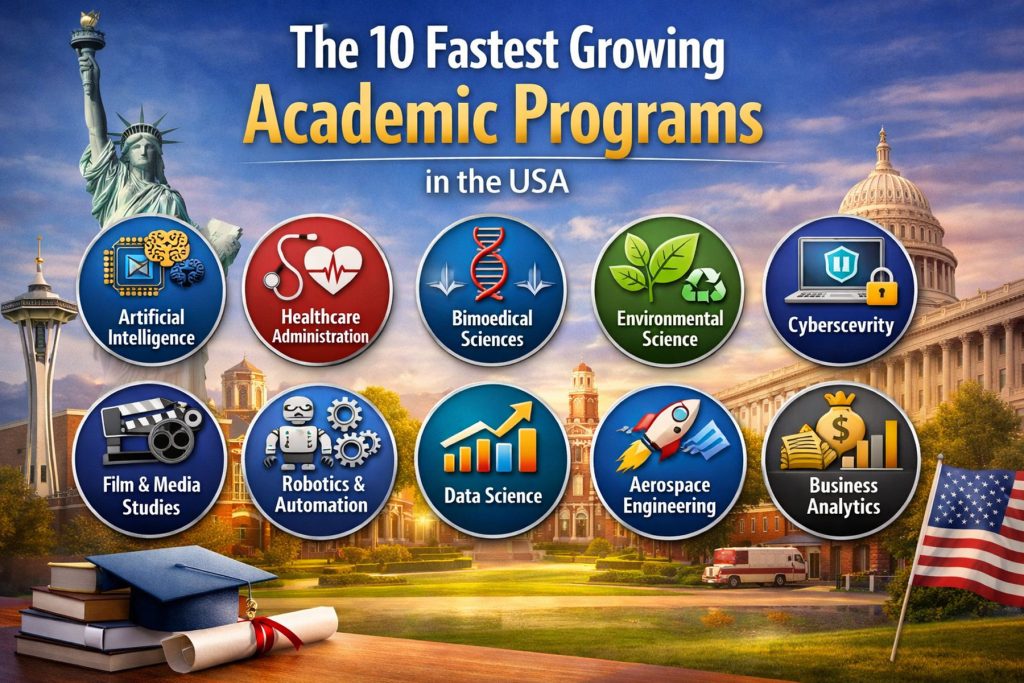

The United States is home to many of the world’s most influential research universities, producing groundbreaking discoveries that shape medicine, engineering, technology, business, and the sciences. From pioneering life saving medical treatments to advancing artificial intelligence and space exploration, American universities have long served as engines of innovation. According to the National Science Foundation, U.S. universities collectively spend tens of billions of dollars on research and development each year, driving scientific progress and economic growth across the country.
Research universities do far more than educate students. They foster collaboration among faculty, industry leaders, government agencies, and entrepreneurs to solve complex global challenges. Many of the technologies people use every day, including the internet, GPS advancements, modern biotechnology, and revolutionary medical therapies, have roots in university research laboratories. These institutions also produce thousands of patents, startup companies, and Nobel Prize winners, reinforcing America’s position as a global leader in innovation.
This list highlights the Top 10 American universities leading research and innovation, based on research funding, scientific impact, technological breakthroughs, faculty excellence, global reputation, and contributions to society. Whether students aspire to careers in engineering, healthcare, business, computer science, or scientific research, these universities continue setting the standard for academic excellence and discovery.
Top 10 American Universities Leading Research and Innovation
1 Massachusetts Institute of Technology (MIT)
The Massachusetts Institute of Technology consistently ranks among the world’s most innovative universities because of its unmatched focus on science, engineering, technology, entrepreneurship, and applied research.
Founded in 1861, MIT has played a central role in advances ranging from artificial intelligence and robotics to aerospace engineering and biotechnology. Its laboratories collaborate closely with government agencies, healthcare organizations, and private companies to solve real world problems.
MIT researchers have contributed to developments in renewable energy, advanced computing, nanotechnology, and quantum science. The university also encourages entrepreneurship through startup incubators and innovation programs that have produced thousands of successful companies worldwide.
Its culture of combining research with practical application makes MIT the benchmark for innovation in higher education.
2 Stanford University
Located in the heart of Silicon Valley, Stanford University has helped shape the modern technology industry for decades.
The university has deep connections with companies such as Google, NVIDIA, Hewlett Packard, Cisco, and many successful startups founded by alumni and faculty members. Stanford’s research strengths include artificial intelligence, computer science, medicine, engineering, sustainability, and business innovation.
Its proximity to venture capital firms creates unique opportunities for students and researchers to transform ideas into successful businesses.
Stanford’s influence extends far beyond California, making it one of the world’s leading centers for technological innovation.
3 Harvard University
Harvard University combines centuries of academic excellence with world class research across medicine, law, business, public policy, engineering, and the social sciences.
Harvard Medical School and its affiliated hospitals contribute significantly to advances in healthcare, genetics, neuroscience, and public health. Researchers regularly publish influential studies that shape healthcare policies around the world.
The university also supports entrepreneurship through innovation labs, startup accelerators, and interdisciplinary research collaborations.
Its global reputation and extensive research network continue attracting leading scholars from every continent.
4 California Institute of Technology (Caltech)
Despite its relatively small student population, Caltech produces an extraordinary level of scientific research and technological innovation.
The university is internationally recognized for physics, astronomy, chemistry, engineering, environmental science, and space exploration. Caltech manages NASA’s Jet Propulsion Laboratory, where researchers contribute to many of America’s most important space missions.
Faculty and alumni have received numerous Nobel Prizes, demonstrating the university’s commitment to scientific excellence.
Caltech continues pushing the boundaries of knowledge through highly collaborative research environments.
5 University of California, Berkeley
The University of California, Berkeley has remained a global leader in research for more than a century.
Its contributions span computer science, environmental studies, engineering, economics, chemistry, artificial intelligence, and public policy. Berkeley researchers have played important roles in discoveries involving nuclear science, renewable energy, and advanced computing.
The university also supports one of the nation’s strongest startup ecosystems, helping students transform research into commercial innovations.
Berkeley’s emphasis on interdisciplinary collaboration strengthens its impact across multiple scientific fields.
6 Johns Hopkins University
Johns Hopkins University is widely regarded as one of America’s leading research institutions, particularly in medicine and public health.
For decades, it has ranked among the nation’s top universities in research expenditures. Its medical school and affiliated hospital continue producing groundbreaking work in cancer research, neuroscience, infectious diseases, and biomedical engineering.
The university also contributes significantly to national security, international relations, and advanced engineering research.
Its strong commitment to scientific discovery has improved healthcare worldwide.
7 University of Michigan
The University of Michigan has built an outstanding reputation for engineering, medicine, automotive research, business, artificial intelligence, and sustainability.
Its partnerships with major industries encourage innovation while giving students valuable research opportunities. Researchers contribute to autonomous vehicles, advanced manufacturing, robotics, and healthcare technology.
The university also maintains one of the country’s largest research budgets among public institutions.
Its balanced approach to education, innovation, and industry collaboration supports continued leadership in scientific advancement.
8 Carnegie Mellon University
Carnegie Mellon University has become synonymous with computer science, robotics, cybersecurity, and artificial intelligence.
Researchers at Carnegie Mellon continue advancing autonomous systems, machine learning, software engineering, and human computer interaction. Government agencies and leading technology companies frequently collaborate with the university on emerging technologies.
The institution’s entrepreneurial culture also supports numerous technology startups founded by students and faculty.
Its specialized expertise places Carnegie Mellon among the world’s most influential technology research universities.
9 University of Washington
The University of Washington has emerged as a major research leader in medicine, public health, computer science, environmental science, and biotechnology.
Located near major technology companies in Seattle, the university benefits from strong partnerships with industry leaders while maintaining extensive federal research funding.
Its medical research programs continue contributing to advances in infectious diseases, genetics, neuroscience, and global health.
The university’s interdisciplinary research approach encourages collaboration across numerous academic disciplines.
10 Duke University
Duke University has earned international recognition for research excellence in healthcare, biomedical engineering, public policy, business, and environmental science.
Its medical center regularly conducts innovative clinical research while engineering faculty contribute to advances in medical devices, artificial intelligence, and materials science.
Duke also emphasizes entrepreneurship through startup accelerators and innovation initiatives that encourage commercialization of university research.
Its combination of academic excellence and practical innovation continues strengthening its global reputation.
Trends Driving Research and Innovation in American Universities
Research universities across the United States are investing heavily in several rapidly growing fields.
Artificial intelligence continues transforming healthcare, education, manufacturing, and scientific research. Biotechnology and precision medicine are improving patient care through personalized treatments. Climate science and renewable energy research support sustainable economic development, while quantum computing promises major advances in cybersecurity and advanced computing.
Universities are also strengthening partnerships with private companies, government agencies, and nonprofit organizations to accelerate the translation of research into practical applications.
Interdisciplinary collaboration has become increasingly important, bringing together experts from engineering, medicine, business, computer science, and environmental science to solve complex challenges.
What Makes a University a Research Leader?
Several factors distinguish the nation’s leading research institutions.
- Significant annual research funding
- Highly cited scientific publications
- Nobel Prize winning faculty and alumni
- Advanced research laboratories
- Industry and government partnerships
- Strong graduate and doctoral programs
- Successful technology commercialization
- Startup incubation and entrepreneurship support
- Global academic collaborations
- Commitment to interdisciplinary innovation
Universities excelling in these areas consistently contribute to scientific progress while preparing future generations of researchers and innovators.
America’s Leading Research Universities
| Rank | University | State | Major Research Strength | Notable Contribution |
| 1 | Massachusetts Institute of Technology | Massachusetts | Engineering and AI | Technology innovation |
| 2 | Stanford University | California | Computer Science | Silicon Valley leadership |
| 3 | Harvard University | Massachusetts | Medicine and Public Health | Biomedical research |
| 4 | California Institute of Technology | California | Space Science | NASA collaboration |
| 5 | University of California, Berkeley | California | Engineering | Scientific discoveries |
| 6 | Johns Hopkins University | Maryland | Medicine | Healthcare innovation |
| 7 | University of Michigan | Michigan | Engineering | Automotive and robotics |
| 8 | Carnegie Mellon University | Pennsylvania | Artificial Intelligence | Robotics leadership |
| 9 | University of Washington | Washington | Biotechnology | Medical research |
| 10 | Duke University | North Carolina | Biomedical Engineering | Clinical innovation |
The Future of Research and Innovation in American Higher Education
American universities will continue playing a central role in solving many of the world’s most pressing challenges. Investments in artificial intelligence, biotechnology, renewable energy, cybersecurity, advanced manufacturing, and space exploration are expected to accelerate over the coming decade, creating new opportunities for students, researchers, and industry partners.
The institutions featured in this ranking demonstrate that research excellence depends on more than academic reputation. Their ability to attract exceptional faculty, secure substantial research funding, collaborate across disciplines, and translate discoveries into practical solutions has made them global leaders in innovation. As science and technology continue advancing, these universities will remain at the forefront of breakthroughs that improve lives, strengthen the American economy, and shape the future of the world.