
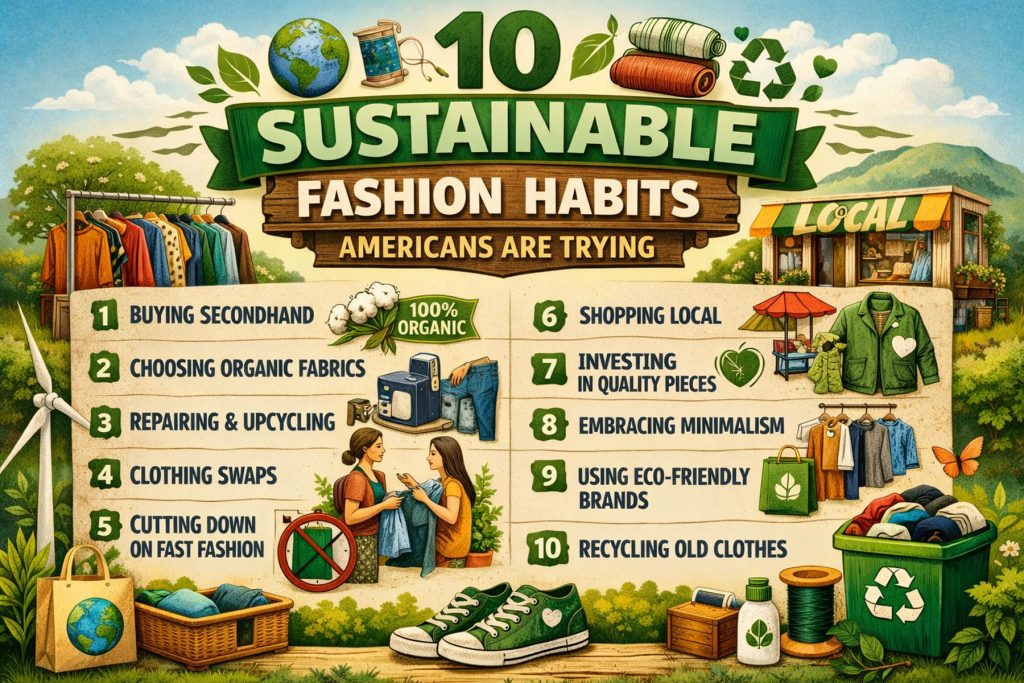
The average American throws away dozens of pounds of clothing every year. According to data published by the United States Environmental Protection Agency, textile waste remains one of the fastest growing categories of municipal solid waste. At the same time, consumers are becoming increasingly aware of the environmental impact associated with clothing production, transportation, and disposal. This shift has helped make sustainable fashion habits a growing part of everyday purchasing decisions across the United States.
Consumer attitudes toward fashion have changed significantly over the past decade. Price and style still matter, but many shoppers now pay closer attention to garment quality, longevity, sourcing practices, and environmental impact. Industry reports from organizations such as the Global Fashion Agenda and McKinsey have documented rising interest in circular fashion models, resale markets, and more responsible consumption patterns. These trends are influencing how people build wardrobes and evaluate purchases.
The movement is not limited to environmental advocates or fashion insiders. College students, working professionals, parents, and retirees are all participating in new approaches to clothing consumption. Some habits are driven by sustainability concerns, while others are motivated by financial savings or a desire for higher quality garments. Together, these behavioral shifts reveal how Americans are redefining the relationship between style, value, and responsibility.
Why Sustainable Fashion Matters More Than Ever
Fashion is one of the world’s largest industries, employing millions of people and generating trillions of dollars in economic activity. Yet it also carries significant environmental consequences.
The fashion sector consumes substantial amounts of water, energy, and raw materials. Cotton cultivation, textile dyeing, manufacturing, and transportation all contribute to resource use and greenhouse gas emissions. The rise of ultra fast production cycles has accelerated consumption patterns, often resulting in garments being worn only a handful of times before disposal.
As awareness grows, consumers are increasingly seeking practical ways to reduce their impact without abandoning personal style. Sustainable fashion habits provide an accessible path toward that goal.
The Shift Toward Conscious Consumption
Many Americans are moving away from impulsive purchasing behavior. Instead of focusing solely on trends, they are evaluating clothing based on durability, versatility, and long term value.
This shift reflects a broader cultural movement toward intentional consumption. Similar patterns can be seen in food purchasing, household products, and transportation choices. Fashion has become another area where consumers are aligning spending decisions with personal values.
The following habits represent some of the most notable changes taking place across the United States.
1. Buying Less but Choosing Better
One of the most significant sustainable fashion habits Americans are trying involves purchasing fewer garments overall.
Rather than filling closets with inexpensive items that may wear out quickly, consumers are investing in pieces designed to last. This approach often emphasizes stronger construction, higher quality fabrics, timeless styling, and greater versatility.
Research from consumer behavior studies consistently shows that durable products frequently deliver better value over time despite higher initial costs. A well made jacket worn for ten years generally creates less waste than multiple lower quality replacements purchased during the same period.
The principle is straightforward. Longevity reduces consumption, which in turn reduces environmental impact.
What Consumers Look For
- Fabric quality
- Reinforced stitching
- Repairability
- Classic designs
- Transparent manufacturing practices
These factors increasingly influence purchasing decisions among sustainability minded shoppers.
2. Shopping Secondhand More Frequently
The secondhand apparel market has experienced remarkable growth in recent years.
Resale platforms, thrift stores, vintage shops, and peer to peer marketplaces have transformed the way Americans shop for clothing. Younger consumers, particularly Millennials and Generation Z, have helped drive this trend by embracing pre owned fashion as both an economic and environmental choice.
Secondhand purchasing extends a garment’s usable life and reduces demand for newly manufactured products. It also allows consumers to access higher quality brands at lower prices.
Growth of the Resale Economy
Several market reports have projected continued expansion of the resale sector through the coming decade. Increased digital accessibility has made secondhand shopping more convenient than ever before.
Popular categories include:
- Denim
- Outerwear
- Luxury accessories
- Athletic apparel
- Vintage fashion
As social attitudes toward pre owned goods continue to evolve, secondhand shopping has become increasingly mainstream.
3. Building Capsule Wardrobes
The concept of the capsule wardrobe has gained considerable attention among Americans seeking a more sustainable lifestyle.
A capsule wardrobe consists of a carefully selected collection of versatile garments that work together across multiple outfits. Instead of owning hundreds of rarely worn items, individuals focus on fewer pieces with greater utility.
This strategy offers several advantages:
- Reduced spending
- Less clutter
- Simplified daily decisions
- Greater outfit flexibility
- Lower overall consumption
The approach encourages thoughtful purchasing rather than trend driven accumulation.
Key Components of a Capsule Wardrobe
| Category | Common Pieces |
| Tops | Neutral shirts, sweaters, blouses |
| Bottoms | Jeans, trousers, skirts |
| Outerwear | Coat, jacket, blazer |
| Footwear | Sneakers, boots, versatile shoes |
| Accessories | Minimal timeless accessories |
When selected carefully, these items can create dozens of outfit combinations without requiring excessive ownership.
4. Repairing Clothes Instead of Replacing Them
Previous generations often repaired garments as a routine household practice. That tradition is making a gradual return.
Basic sewing skills, visible mending techniques, and professional alteration services are helping consumers extend garment life. A missing button, small tear, or loose seam no longer automatically signals the end of a clothing item’s usefulness.
Repair culture aligns closely with sustainability goals because it delays disposal and reduces replacement purchases.
The Rise of Visible Mending
Visible mending transforms repairs into design features rather than attempts at concealment. Decorative stitching, patches, and embroidery can add personality while preserving functionality.
Many consumers appreciate the uniqueness this creates, turning repaired garments into one of a kind pieces.
5. Supporting Brands With Transparent Practices
Trust has become an important factor in modern fashion purchasing decisions.
Consumers increasingly seek information about sourcing, labor standards, manufacturing locations, and environmental commitments. Brands that provide detailed transparency reports often receive greater attention from sustainability conscious shoppers.
Transparency does not automatically guarantee sustainability. However, it allows consumers to make more informed decisions and compare practices across companies.
Factors Consumers Evaluate
| Transparency Area | Consumer Interest |
| Supply chains | High |
| Labor conditions | High |
| Material sourcing | High |
| Environmental reporting | High |
| Product traceability | Growing |
The availability of information has changed expectations across the industry.
6. Choosing Natural and Recycled Materials
Material selection plays a major role in sustainability discussions.
Consumers are paying closer attention to fibers used in clothing production. Interest has increased in materials such as organic cotton, recycled polyester, linen, hemp, and responsibly sourced wool.
Each material comes with advantages and tradeoffs. No single fiber provides a perfect solution for every application. However, awareness of textile composition is becoming a more common part of the purchasing process.
Material Comparison
| Material | Key Benefit |
| Organic cotton | Reduced chemical inputs |
| Linen | Lower water requirements |
| Hemp | Durable and resilient |
| Recycled polyester | Uses existing materials |
| Recycled nylon | Supports circular production |
The growing focus on materials reflects a broader interest in product life cycle impacts.
7. Washing Clothes Less Frequently
One of the simplest sustainable fashion habits Americans are trying happens after the purchase.
Many consumers are learning that clothing often does not require washing after every use. Excessive laundering contributes to water consumption, energy use, fabric degradation, and color fading.
Textile experts frequently note that certain garments, particularly denim and outerwear, can often be worn multiple times before requiring cleaning.
Appropriate garment care can significantly extend lifespan while reducing resource consumption.
Smart Clothing Care Practices
- Spot cleaning when appropriate
- Air drying garments
- Using colder water temperatures
- Following care labels carefully
- Avoiding unnecessary wash cycles
These habits reduce wear while helping preserve fabric quality.
Part 2 will continue with Habits 8 through 10, additional research findings, future trends, the full conclusion, 10 FAQs, and the social media caption.
8. Renting Clothing for Special Occasions
Ownership is no longer the only option for accessing fashion.
Clothing rental services have gained traction among Americans who want variety without accumulating rarely worn garments. Formalwear, designer pieces, wedding guest outfits, and seasonal fashion are among the most commonly rented categories.
Many consumers recognize that purchasing an expensive garment for a single event often results in years of closet storage followed by eventual disposal. Renting provides access to high quality clothing while reducing the need for one time purchases.
This habit reflects a broader shift toward access based consumption. Similar models have transformed transportation, entertainment, and technology sectors. Fashion is increasingly participating in the same evolution.
Why Rental Fashion Appeals to Consumers
- Reduced wardrobe clutter
- Lower cost compared to ownership
- Access to premium brands
- Less demand for infrequently used garments
- Greater flexibility for changing style preferences
For many consumers, rental services represent a practical balance between fashion variety and sustainability goals.
9. Reselling Unwanted Clothing
The resale market is not only changing how people buy clothing. It is also transforming how they dispose of it.
Instead of discarding garments that no longer fit or suit their style, Americans are increasingly selling them through digital marketplaces, consignment stores, and local community groups.
This approach extends product life cycles and supports circular consumption models. Clothing remains in active use rather than entering landfills prematurely.
The financial incentive is also significant. Consumers can recover a portion of their original investment while making quality garments available to new owners.
The Circular Fashion Effect
Circular fashion focuses on keeping products and materials in use for as long as possible.
When a garment passes through multiple owners, its environmental footprint is distributed across more wear cycles. This increases resource efficiency and reduces demand for replacement production.
As digital platforms become more sophisticated, resale is expected to remain one of the fastest growing segments of the fashion economy.
10. Donating Responsibly and Recycling Textiles
Americans are becoming more aware that responsible disposal matters just as much as responsible purchasing.
Not every garment can be resold, repaired, or reused indefinitely. When clothing reaches the end of its practical life, donation programs and textile recycling initiatives can help divert materials from waste streams.
Responsible donation involves ensuring that items are clean, wearable, and genuinely useful to receiving organizations. Textile recycling programs can process damaged fabrics that are no longer suitable for direct reuse.
Common End of Life Options
| Disposal Method | Sustainability Impact |
| Resale | Extends product life significantly |
| Donation | Supports continued use |
| Upcycling | Creates new products |
| Textile recycling | Recovers material value |
| Landfill disposal | Least preferred option |
Awareness of these pathways has increased as consumers become more informed about fashion waste challenges.
Research Findings Supporting Sustainable Fashion Habits
Consumer behavior data suggests that sustainable fashion is transitioning from a niche interest into a broader market movement.
Research conducted by multiple industry organizations has found that younger generations consistently express greater interest in environmental and social responsibility when making purchasing decisions. Generation Z and Millennials often rank sustainability among the factors they consider before buying apparel.
Several studies have also identified a growing preference for quality over quantity. Consumers increasingly report that durability influences purchasing decisions, especially during periods of economic uncertainty. A garment that lasts longer often represents a stronger value proposition than a lower priced alternative that requires frequent replacement.
Another notable finding involves resale growth. Market analysts have repeatedly projected that secondhand apparel will continue expanding at a faster rate than many traditional retail segments. This trend reflects changing attitudes toward ownership, affordability, and environmental responsibility.
The data points toward a clear conclusion. Sustainable fashion habits are becoming integrated into mainstream consumer behavior rather than remaining limited to a small subset of shoppers.
How Technology Is Shaping Sustainable Fashion
Technology is playing an increasingly important role in helping consumers make informed clothing choices.
Digital product passports, supply chain tracking systems, and enhanced transparency tools are providing shoppers with greater visibility into how garments are produced. Consumers can increasingly access information about materials, sourcing practices, and manufacturing processes before making purchases.
Artificial intelligence is also improving inventory management for retailers. Better forecasting can help reduce overproduction, one of the major contributors to waste within the fashion industry.
Online resale platforms continue to evolve as well. Enhanced authentication systems, improved search functionality, and streamlined logistics are making secondhand shopping more convenient and trustworthy.
These innovations suggest that sustainability and technology are becoming closely connected within the future of fashion.
Future Trends Americans Are Watching
Several emerging developments could shape the next phase of sustainable fashion habits in the United States.
Circular Business Models
More brands are investing in repair services, take back programs, and resale partnerships. These initiatives encourage longer product lifespans and greater material recovery.
Improved Textile Recycling
Advancements in recycling technology may increase the amount of fabric that can be effectively recovered and reused in future products.
Greater Supply Chain Visibility
Consumers are demanding more detailed information about production processes. Companies that provide transparent reporting may gain stronger consumer trust.
Durability as a Competitive Advantage
As awareness grows, product longevity may become a stronger selling point across multiple apparel categories.
Consumer Education
Access to better information about garment care, textile composition, and purchasing decisions could continue influencing buying behavior.
Collectively, these developments suggest that sustainability will remain a significant factor in fashion industry evolution over the coming decade.
The Broader Cultural Shift Behind Sustainable Fashion Habits
The rise of sustainable fashion habits reflects more than changing shopping preferences.
It signals a broader reassessment of consumption itself. Americans are increasingly questioning whether constant replacement truly delivers long term value. Many consumers now evaluate purchases through multiple lenses, including quality, utility, environmental impact, and financial practicality.
This shift does not require perfection. Most participants adopt sustainable fashion gradually, incorporating habits that align with personal circumstances and priorities. Small changes often accumulate into meaningful results over time.
The significance of this movement lies not only in environmental outcomes but also in how it redefines value. Clothing is increasingly viewed as an investment in durability, craftsmanship, and long term usefulness rather than a disposable commodity.
Closing Thoughts
The most influential sustainable fashion habits Americans are trying share a common principle: making clothing last longer and work harder. Whether through secondhand shopping, garment repair, rental services, mindful purchasing, or responsible disposal, consumers are finding practical ways to reduce waste while maintaining personal style.
The growing popularity of these habits reflects a deeper cultural transition toward intentional consumption. Rather than pursuing endless accumulation, many shoppers are prioritizing quality, versatility, and longevity. This evolution is reshaping expectations across the fashion industry and encouraging businesses to respond with greater transparency and innovation.
Sustainable fashion is unlikely to be defined by a single breakthrough or trend. Its impact will come from millions of individual decisions made every day. As consumer awareness continues to expand, the habits gaining momentum today may become standard practice for future generations, creating a fashion economy that places greater value on durability, responsibility, and long term thinking.
Frequently Asked Questions
What are sustainable fashion habits?
Sustainable fashion habits are consumer behaviors that reduce the environmental and social impact of clothing consumption. Examples include buying fewer garments, choosing durable products, shopping secondhand, and extending clothing lifespan through proper care.
Why are sustainable fashion habits becoming popular in the United States?
Growing awareness of textile waste, environmental concerns, and product quality has encouraged many Americans to rethink shopping behaviors. Economic considerations also play a role, as durable clothing often provides better long term value.
Does buying secondhand clothing really help the environment?
Secondhand shopping can extend the useful life of garments and reduce demand for newly manufactured products. This helps maximize the value of resources already used in clothing production.
What is a capsule wardrobe?
A capsule wardrobe is a curated collection of versatile clothing items that can be mixed and matched easily. The approach emphasizes quality, functionality, and reduced consumption.
How can clothing repairs support sustainability?
Repairs help keep garments in use longer, reducing the need for replacement purchases. Extending product lifespan is one of the most effective ways to reduce fashion related waste.
Are sustainable clothing options always more expensive?
Not necessarily. While some premium products carry higher upfront costs, secondhand shopping, resale platforms, and durable purchases can provide significant long term value.
What materials are commonly associated with sustainable fashion?
Frequently discussed materials include organic cotton, hemp, linen, recycled polyester, recycled nylon, and responsibly sourced natural fibers. Each material offers different benefits and limitations.
Is renting clothing considered sustainable?
Rental services can reduce demand for garments intended for limited use, particularly formalwear and special occasion outfits. The overall impact depends on factors such as transportation, maintenance, and usage rates.
What happens to clothing donated to charities?
Donated clothing may be resold, redistributed, exported, recycled, or processed depending on quality and organizational practices. Donation can help extend product life when items remain wearable.
What is the future of sustainable fashion in America?
Industry trends suggest continued growth in resale markets, circular business models, improved recycling technologies, and greater supply chain transparency. Consumer demand is expected to remain a major driver of change.

