The job market in the United States is changing faster than ever before. Advances in artificial intelligence, automation, digital transformation, and globalization have reshaped the skills employers value most. While academic knowledge remains essential, businesses increasingly seek graduates who can combine technical expertise with critical thinking, communication, and adaptability. According to the World Economic Forum and numerous U.S. labor market reports, many of today’s fastest growing careers require a blend of digital proficiency and strong interpersonal abilities.
For American students, preparing for the future means going beyond textbooks. Colleges, universities, and employers now emphasize practical skills that improve career readiness and support lifelong learning. Whether pursuing higher education, entering the workforce directly, or launching a business, students who develop these competencies are better positioned to succeed in a competitive economy.
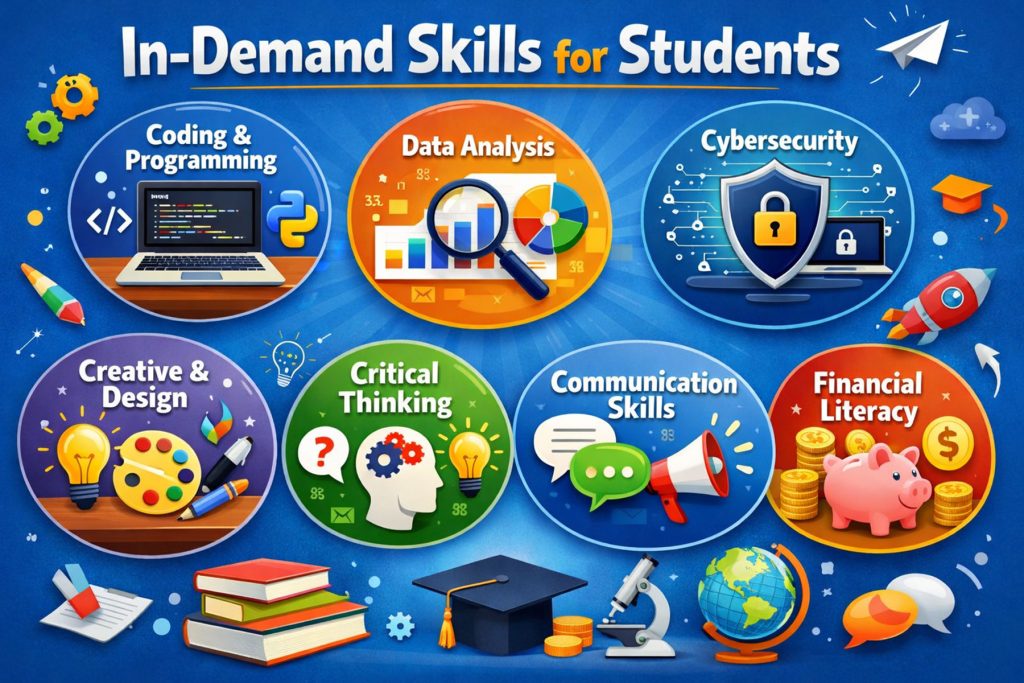
The most in-demand skills American students should learn today reflect the needs of modern workplaces while preparing learners for careers that may not even exist yet. From artificial intelligence to leadership, these abilities help students remain flexible as industries continue to evolve.
The Most In-Demand Skills American Students Should Learn Today
1 Artificial Intelligence Literacy
Artificial intelligence has become one of the most important technologies shaping the global economy. Students no longer need to become AI engineers to benefit from understanding how AI works.
Basic knowledge of generative AI, machine learning concepts, prompt writing, and responsible AI use can improve productivity across nearly every profession. Businesses increasingly expect employees to use AI tools for research, content creation, customer support, data analysis, and workflow automation.
Learning AI literacy today prepares students for careers in technology, healthcare, education, finance, marketing, manufacturing, and countless other industries.
2 Digital and Technology Skills
Digital proficiency has become a fundamental workplace requirement.
Students should understand cloud computing, cybersecurity awareness, spreadsheet analysis, presentation software, collaborative platforms, and digital communication tools. Familiarity with software used in professional environments makes graduates more valuable to employers from their first day on the job.
Even careers outside technology now require confidence with digital systems, making these skills universally important.
3 Critical Thinking and Problem Solving
Employers consistently rank critical thinking among the most valuable workplace abilities.
Businesses want employees who can evaluate information, identify challenges, consider multiple solutions, and make informed decisions based on evidence rather than assumptions.
Students develop these skills by participating in research projects, solving real world problems, debating complex topics, and analyzing data from multiple perspectives.
As automation handles routine work, human decision making becomes even more valuable.
4 Communication Skills
Strong communication remains one of the most sought after qualities across every profession.
Students should learn how to write clearly, deliver confident presentations, communicate professionally through email, participate in meetings, and explain complex ideas in simple language.
Effective communication improves teamwork, leadership, customer service, and career advancement opportunities.
Employers consistently value candidates who can express ideas clearly while listening carefully to others.
5 Data Analysis and Data Literacy
Organizations increasingly rely on data to guide important business decisions.
Students who understand how to collect, interpret, visualize, and communicate data have significant advantages in fields such as business, healthcare, engineering, education, finance, marketing, and government.
Learning spreadsheet analysis, basic statistics, dashboards, and data visualization tools helps students transform information into meaningful insights.
Data literacy has become an essential skill rather than a specialized one.
6 Financial Literacy
Financial education provides lifelong benefits regardless of career choice.
Students should understand budgeting, saving, investing, taxes, credit scores, insurance, retirement planning, and responsible borrowing. These skills help individuals make informed financial decisions throughout adulthood.
Financial literacy also benefits future entrepreneurs by improving business planning and resource management.
Schools increasingly recognize that practical financial knowledge supports both personal and professional success.
7 Adaptability and Continuous Learning
The modern workplace changes rapidly as technology evolves and industries transform.
Employers value individuals who remain curious, embrace new technologies, and willingly learn new skills throughout their careers.
Students who develop adaptability become more resilient during economic changes while remaining competitive in emerging industries.
Continuous learning has become essential because many professionals will work in roles that evolve significantly over time.
8 Leadership and Teamwork
Leadership is no longer limited to management positions.
Businesses seek employees who can collaborate effectively, motivate colleagues, resolve conflicts, and contribute positively within diverse teams.
Students develop leadership through group projects, volunteer work, student organizations, athletics, and community service.
Strong teamwork skills improve productivity while preparing future professionals for increasingly collaborative workplaces.
9 Creativity and Innovation
Innovation continues driving economic growth across the United States.
Creative thinking enables students to develop original ideas, improve existing processes, and solve problems in new ways. Whether designing products, developing software, creating marketing campaigns, or improving healthcare systems, creativity helps organizations remain competitive.
Students who combine technical expertise with innovative thinking often become valuable contributors across multiple industries.
10 Emotional Intelligence
Technical abilities alone rarely guarantee long term career success.
Emotional intelligence includes self awareness, empathy, relationship building, conflict resolution, and effective communication under pressure. These qualities strengthen teamwork, customer interactions, leadership effectiveness, and workplace collaboration.
Organizations increasingly recognize emotional intelligence as an important factor in employee performance, leadership potential, and organizational culture.
Students who develop emotional intelligence often build stronger professional relationships throughout their careers.
Emerging Skills That Will Become Even More Important
Several additional skills are expected to grow in importance over the coming decade.
Cybersecurity awareness is becoming essential as digital threats increase across industries. Project management helps professionals coordinate complex initiatives involving multiple teams. Sustainability knowledge supports careers in environmental science, engineering, manufacturing, and corporate responsibility.
Entrepreneurship is also gaining popularity as more students consider launching startups, freelancing, or creating digital businesses. Understanding business fundamentals, customer needs, and innovation can provide valuable career flexibility.
Foreign language proficiency, particularly when combined with technical expertise, also creates opportunities within global organizations operating across international markets.
Why These Skills Matter in Today’s Economy
The American economy continues shifting toward knowledge based industries where innovation, technology, and collaboration drive growth.
Many routine tasks are increasingly automated, allowing employees to focus on analytical thinking, creativity, customer relationships, and strategic decision making. Companies now hire individuals who demonstrate both technical competence and strong interpersonal abilities.
Higher education institutions are responding by integrating practical learning experiences, internships, industry partnerships, and career readiness programs into academic curricula. Students who actively build these skills before graduation often enter the workforce with greater confidence and stronger employment prospects.
Most In-Demand Skills for American Students
| Rank | Skill | Why It Matters | Careers That Benefit |
| 1 | Artificial Intelligence Literacy | Supports future workplaces | Technology, Healthcare, Marketing |
| 2 | Digital Skills | Essential for nearly every profession | Business, Education, Finance |
| 3 | Critical Thinking | Improves decision making | Engineering, Law, Management |
| 4 | Communication | Strengthens collaboration | Every industry |
| 5 | Data Literacy | Enables informed decisions | Analytics, Healthcare, Finance |
| 6 | Financial Literacy | Supports lifelong success | Business, Personal Finance |
| 7 | Adaptability | Prepares for changing careers | Every industry |
| 8 | Leadership and Teamwork | Encourages collaboration | Management, Nonprofits |
| 9 | Creativity | Drives innovation | Design, Marketing, Technology |
| 10 | Emotional Intelligence | Builds professional relationships | Leadership, Healthcare, Education |
Trends Shaping Future Career Skills
Several long term trends continue influencing the skills employers seek across the United States.
Artificial intelligence is increasing productivity while changing job responsibilities. Remote and hybrid work require stronger digital communication and self management skills. Businesses continue investing in automation, making analytical thinking and creativity more valuable.
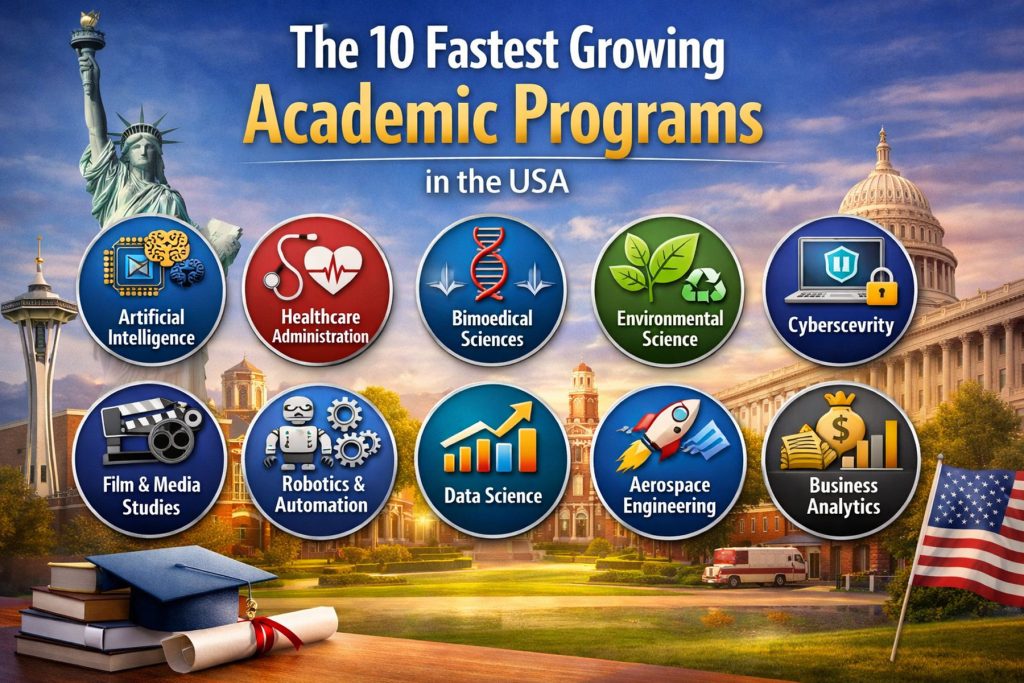
Healthcare, renewable energy, cybersecurity, advanced manufacturing, biotechnology, and data science are projected to remain among the fastest growing career sectors. Students who build transferable skills alongside technical expertise will be better prepared for opportunities across these expanding industries.
Employers are also placing greater emphasis on lifelong learning. Professional certifications, online courses, internships, and hands on experience increasingly complement traditional degrees, allowing workers to keep pace with changing technologies and business needs.
Looking Ahead
The future of work in the United States will reward students who combine knowledge with adaptability, curiosity, and practical skills. While technology will continue transforming industries, human qualities such as communication, creativity, leadership, emotional intelligence, and critical thinking will remain essential for long term success.
Developing the most in-demand skills today provides students with more than stronger employment opportunities. It builds confidence, encourages continuous growth, and prepares future professionals to contribute meaningfully in an economy defined by innovation and constant change. As American workplaces continue evolving, students who invest in these abilities will be well positioned to succeed in careers across virtually every industry.