
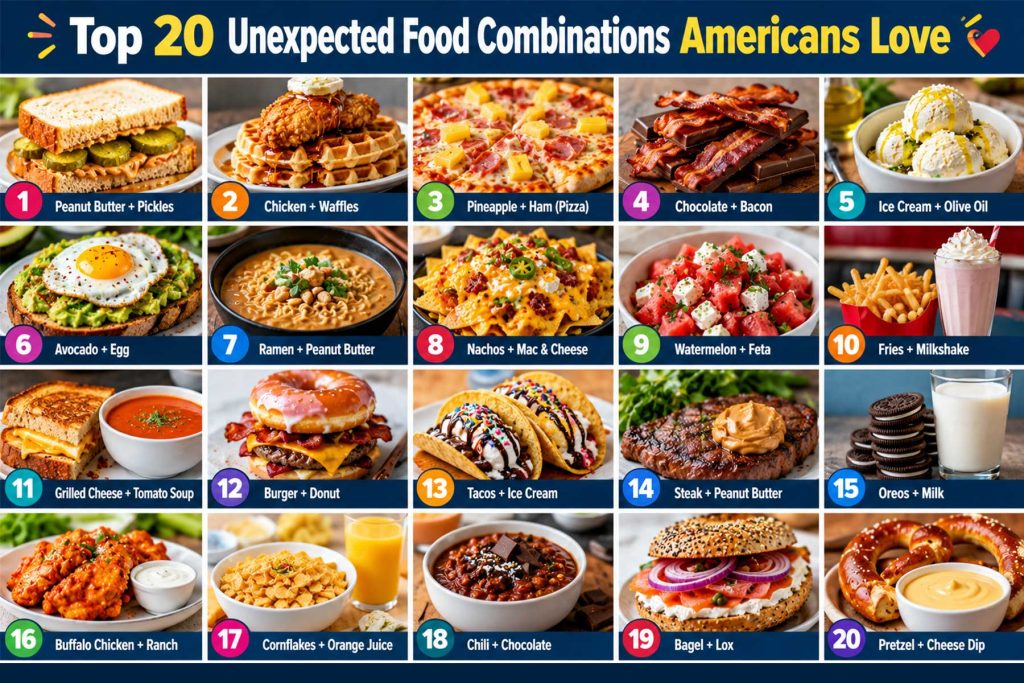
American food culture has never been particularly strict about keeping flavors in separate boxes. Peanut butter can meet jelly, bacon can appear beside pancakes, pickles can sit inside a grilled cheese, and French fries can disappear into a milkshake. Some combinations sound questionable until the first bite makes the logic surprisingly clear.
That willingness to experiment has become even more visible in recent years. The National Restaurant Association’s 2025 culinary forecast highlighted hot honey, fermented and pickled foods, Korean cuisine, Vietnamese cuisine, and other flavor driven trends. Its 2026 forecast also points toward smashed burgers with global influences, Caribbean curry bowls, elevated instant noodles, and other combinations that bring familiar American comfort food together with unexpected flavors. NRA+1
The most interesting combinations are rarely random. They tend to balance opposing sensations such as sweet and salty, creamy and acidic, spicy and sweet, crisp and soft, or rich and refreshing. Some have roots in regional American traditions, while others have been accelerated by restaurants, food creators, social media, and a growing interest in global flavors. The following ranking highlights 20 combinations that have earned a recognizable place in American food culture.
Top 20 Unexpected Food Combinations Americans Love
French Fries and Milkshakes
Few American food combinations create a stronger sweet and salty contrast than French fries dipped into a thick milkshake.
The pairing works because fries bring salt, crispness, and savory potato flavor, while the milkshake contributes sweetness, fat, and a cold creamy texture. The temperature contrast adds another layer to the experience.
The combination is closely associated with American fast food culture, where burgers, fries, and shakes have long appeared together. What began as a casual diner and fast food habit has become a familiar food pairing that regularly appears in online food discussions and restaurant menus.
Its staying power comes from simplicity. Neither component needs to be altered. The appeal comes entirely from putting two familiar foods together in an unexpected way.
Peanut Butter and Pickles
Peanut butter and pickles sound like opposing forces until the flavor structure is considered.
Peanut butter is rich, creamy, salty, and slightly sweet. Pickles provide acidity, crunch, salt, and a sharp fermented or vinegar based flavor. The pickle cuts through the richness of the peanut butter in much the same way acidic ingredients are used to balance rich sauces.
The pairing has a long history in American food culture and has developed a loyal following despite remaining unconventional. Recent food coverage continues to feature peanut butter and pickle sandwiches among unusual combinations that consumers say they genuinely enjoy. Delish
It also illustrates an important principle behind unusual food combinations: contrast can be more appealing than similarity.
Pizza and Pineapple
Few food combinations have generated as much American debate as pineapple on pizza.
The appeal is easy to explain. Pizza already combines salty cheese, acidic tomato sauce, fatty toppings, and a crisp crust. Pineapple adds sweetness, acidity, moisture, and fruit flavor. When paired with ham or another salty meat, the contrast becomes even stronger.
Pineapple has also moved well beyond pizza. The National Restaurant Association highlighted pineapple as a prominent flavor at its 2024 restaurant show, appearing in beverages, desserts, sauces, jellies, and other products. NRA
The combination’s cultural importance may be even larger than its actual popularity. Few toppings have become such a recognizable symbol of the argument between traditional and experimental pizza.
Hot Honey and Pizza
Hot honey takes the pineapple principle in another direction by combining sweetness with chili heat.
A drizzle over pizza can add sweetness to tomato sauce, heat to cheese, and a glossy contrast to salty meats. The flavor is especially effective on pepperoni, sausage, chicken, and vegetable pizzas.
This is not merely an internet food stunt. The National Restaurant Association ranked hot honey among the leading restaurant trends for 2025 and specifically noted its use on pizza, fried chicken, and ice cream. NRA
Hot honey also represents a larger American appetite for sweet heat. The 2025 restaurant show featured hot honey alongside hot maple, spicy seasonings, and other sweet and spicy products. NRA
Bacon and Maple Syrup
Bacon and maple syrup have become almost conventional, but the combination remains an excellent example of an initially unusual flavor pairing.
Crisp bacon delivers salt, smoke, fat, and umami. Maple syrup contributes sweetness and a distinctive caramelized flavor. Pancakes, waffles, French toast, and breakfast sandwiches provide the familiar base that allows the contrast to work.
The combination has also influenced restaurant dishes far beyond breakfast. Maple glazed bacon appears in sandwiches, burgers, desserts, and baked goods.
Its success demonstrates why Americans often respond to combinations that connect comfort with contrast. Both ingredients are familiar individually, but together they create a more intense flavor profile.
Fried Chicken and Waffles
Fried chicken and waffles may seem strange to someone encountering the combination for the first time. In American food culture, however, it has become a recognizable restaurant dish.
The appeal comes from opposing textures and flavors. Fried chicken provides crisp skin, savory meat, salt, and seasoning. Waffles provide a soft interior, crisp edges, mild sweetness, and a surface designed to hold syrup or sauce.
The dish also fits the American preference for turning comfort foods into hybrid meals. It can function as breakfast, brunch, lunch, or dinner, depending on how it is presented.
Adding hot sauce, honey, maple syrup, or spicy butter creates another layer of contrast, making the dish adaptable to changing flavor preferences.
Grilled Cheese and Pickles
A grilled cheese sandwich can become heavy because of its combination of butter, toasted bread, and melted cheese. Pickles solve that problem with acidity and crunch.
The pairing is particularly effective because the pickle cuts through the fat of the cheese while adding a sharp, salty flavor. The warm sandwich and cold pickle also provide a noticeable temperature contrast.
This combination has roots in the broader American diner tradition, where pickles frequently accompany sandwiches. It has also become increasingly visible as consumers show greater interest in pickled foods.
The National Restaurant Association identified fermented and pickled foods as a major menu trend, including kimchi and pickled vegetables. NRA
Peanut Butter and Bacon
Peanut butter and bacon occupy very different flavor categories, but their shared saltiness and richness help connect them.
Peanut butter supplies roasted nut flavor, fat, salt, and mild sweetness. Bacon contributes smoke, crisp texture, salt, and savory depth. On toast or a sandwich, the two create a rich combination that can become even more complex when banana or maple syrup is added.
The combination is particularly associated with the broader American tradition of combining peanut butter with salty ingredients rather than limiting it to sweet foods.
It also shows how one unusual pairing can create another. Once peanut butter is accepted with bacon, adding banana or maple syrup becomes less surprising.
Ice Cream and Olive Oil
Vanilla ice cream with a drizzle of good olive oil sounds more like a chef experiment than a standard dessert, yet the combination has developed a strong following.
The appeal comes from texture and flavor. Olive oil adds fruitiness, peppery notes, and richness to cold creamy ice cream. A pinch of flaky salt can make the contrast even more pronounced.
The combination fits a broader culinary movement in which familiar desserts are finished with ingredients traditionally associated with savory cooking.
It also demonstrates why texture matters as much as flavor. A silky ice cream paired with a glossy oil creates a different mouthfeel from a conventional syrup or sauce.
Watermelon and Salt
Watermelon is naturally sweet and juicy. Salt makes that sweetness appear more pronounced while adding a savory edge.
The combination is especially common during hot weather, when watermelon is served chilled as a snack, side dish, or picnic food. A light amount of salt can intensify the fruit without overpowering its flavor.
This pairing also connects with the popularity of sweet and salty fruit combinations more broadly. Tajin style seasonings, chili salts, and spicy fruit toppings have helped normalize the idea of putting savory and spicy seasonings on sweet produce.
The National Restaurant Association’s 2025 restaurant show identified watermelon as a notable beverage flavor, showing how the fruit continues to appear in increasingly varied food and drink formats. NRA
Chocolate Covered Potato Chips
Potato chips and chocolate combine two highly recognizable snack sensations: salty crunch and rich sweetness.
The potato chip contributes salt, crispness, and roasted potato flavor. Chocolate provides sweetness, cocoa bitterness, and a smooth coating. The result is similar to the appeal of salted caramel, where salt prevents sweetness from becoming one dimensional.
The combination has moved from homemade novelty into packaged snack culture, specialty candy shops, holiday gift assortments, and dessert menus.
Its appeal is easy to understand from a sensory perspective. The crisp chip breaks through the chocolate while the chocolate softens the intensity of the salt.
Ranch Dressing and Pizza
Ranch dressing with pizza is an especially American example of turning a familiar condiment into a dipping sauce.
The creamy dressing provides acidity, herbs, garlic, and richness that can contrast with tomato sauce, melted cheese, and salty toppings. It is particularly common with chicken based pizzas, buffalo style pizza, and crust dipping.
Ranch has also become part of the larger American tendency to use familiar sauces outside their original roles. It can accompany vegetables, wings, fries, sandwiches, chips, and other foods.
The combination succeeds because ranch does not compete with pizza’s primary flavors. Instead, it adds another layer of creaminess and acidity.
French Fries and Gravy
French fries with gravy are closely associated with Canadian poutine, but Americans have embraced many variations of the broader concept.
The combination makes culinary sense. Crisp fries provide salt and texture, while hot gravy adds moisture, richness, and savory depth. Cheese curds or shredded cheese can make the dish even more substantial.
Across the United States, loaded fries have become a flexible restaurant category. They can be topped with chili, cheese, pulled pork, chicken, jalapenos, bacon, or regional sauces.
The National Restaurant Association’s 2026 forecast identifies comfort foods with global influences as a major menu direction, reflecting the continuing appetite for familiar foods presented in new forms. NRA
Pickles and Fried Chicken
Fried chicken and pickles are a classic example of richness meeting acidity.
The chicken is crispy, salty, and fatty. Pickles are sharp, acidic, crunchy, and refreshing. The contrast keeps each bite from becoming too heavy.
Nashville hot chicken has helped strengthen this pairing because spicy fried chicken is frequently accompanied by pickles and white bread. Pickles also work with fried chicken sandwiches, tenders, burgers, and loaded fries.
The pairing reflects a wider American interest in pickled ingredients. The National Restaurant Association has identified pickled and fermented foods as important menu trends, while the 2025 restaurant show featured pickle flavors in drinks, condiments, and snacks. NRA+1
Chocolate and Chili
Chocolate and chili may have deep roots outside the United States, but American consumers have increasingly embraced the combination in desserts, sauces, candies, and beverages.
Chili adds warmth and complexity to chocolate rather than simply making it taste hot. Cocoa can soften the perception of spice while adding bitterness and depth.
The pairing is particularly effective with dark chocolate because the bitterness gives the chili somewhere to sit without becoming overly sweet.
American restaurants have also incorporated the idea into hot chocolate, chocolate bars, brownies, truffles, ice cream, and specialty sauces. It fits perfectly into the larger sweet heat movement currently influencing U.S. menus. NRA
Strawberries and Balsamic Vinegar
Strawberries are naturally sweet and acidic, while balsamic vinegar contributes acidity, fruitiness, and a complex sweet and sour character.
The combination became increasingly familiar through restaurant desserts and home cooking. A small amount of balsamic can intensify the flavor of ripe strawberries without making the dessert taste like salad dressing.
The pairing works best when the vinegar is used carefully. Too much can overwhelm the fruit, while a small amount creates contrast.
It is another example of a food combination that sounds savory but works because the ingredients share underlying fruit and acidity characteristics.
Apple Pie and Cheddar Cheese
Apple pie with cheddar cheese is particularly associated with experimentation as major forces influencing American menus. It specifically points to smashed burgers with global influences and global comfort foods as examples of familiar dishes being modified with new flavors. have at least one familiar anchor. Consumers know what pizza tastes like before trying pineapple. They know what lemonade tastes like before trying pickle brine changes the experience. Pickles cut through richness, salt intensifies sweetness, chili gives chocolate more depth, and hot honey transforms familiar pizza without making it unrecognizable. That balance explains why some strange sounding ideas become enduring favorites while others disappear after a few viral posts. As American menus with milkshakes, pineapple on pizza, fried chicken with waffles, hot honey with pizza, and bacon with maple syrup are among the best known unusual pairings. Their popularity comes from familiar ingredients that create strong sweet, salty, spicy, or American regional food traditions, including New England and parts of the Midwest.
The pie brings warm apples, cinnamon, sugar, butter, and pastry. Sharp cheddar contributes salt, acidity, savory flavor, and fat.
The combination has an important historical dimension because it is not simply a social media invention. Regional American food traditions have long used cheese alongside sweet fruit desserts.
Its persistence shows that an unusual food combination does not need to be new to remain culturally interesting. Sometimes the surprising part is that a traditional pairing has survived while other food fashions have disappeared.
Banana, Peanut Butter, and Bacon
Adding banana to peanut butter and bacon creates a three way balance of sweet, salty, creamy, and savory flavors.
Banana provides natural sweetness and soft texture. Peanut butter contributes roasted nuttiness and richness. Bacon adds salt, smoke, and crispness.
The combination is often associated with the famous peanut butter, banana, and bacon sandwich linked to Elvis Presley, although the broader popularity of such sandwiches extends beyond any single person.
Its appeal illustrates how Americans often build food combinations incrementally. Once two ingredients work together, a third ingredient can introduce another contrasting flavor without destroying the balance.
Macaroni and Cheese With Hot Sauce
Macaroni and cheese is one of America’s most recognizable comfort foods. Hot sauce adds acidity, spice, and brightness to an otherwise rich dish.
The combination is especially effective because cheese and chili have complementary characteristics. Heat can make a creamy dish feel less heavy, while acidity adds a sharper finish.
The popularity of spicy condiments across American food culture has made this pairing increasingly ordinary. Hot sauce is no longer restricted to tacos, wings, or eggs. It appears on pizza, sandwiches, noodles, fried chicken, and many other comfort foods.
The National Restaurant Association’s recent forecasts reinforce the broader demand for bold and spicy flavor combinations, including hot honey and other sweet heat formats. NRA+1
Pickle Flavors and Lemonade
Pickle lemonade may be the strangest combination on this list, but it has already moved beyond the realm of individual kitchen experiments.
At the 2025 National Restaurant Association Show, pickle flavored lemonades appeared in multiple forms, including a pickle lemonade made with traditional fountain lemonade and pickle seasoning, along with a fizzy version combining dill pickle brine, lemonade, soda, and a pickle garnish. NRA
The combination works on the same basic principle as many successful unusual drinks. Lemonade provides sweetness and acidity, while pickle brine introduces salt, vinegar, and savory dill notes.
Whether pickle lemonade becomes a permanent mainstream beverage remains uncertain. Its appearance at a major industry event is nevertheless evidence that American food culture is increasingly willing to test combinations that would once have seemed almost impossible.
Why Americans Like Unexpected Food Combinations
The appeal of unusual food pairings is not simply about being adventurous. Most successful combinations solve a sensory problem.
Rich foods benefit from acidity. Sweet foods can become more interesting with salt. Mild dishes can gain energy from spice. Soft foods can become more satisfying when paired with something crisp.
This explains why seemingly unrelated combinations often work better than expected.
French fries and milkshakes combine salt and sweetness. Grilled cheese and pickles combine fat and acidity. Hot honey and pizza combine sweetness and heat. Chocolate and chili combine bitterness, sweetness, and spice.
There is a recognizable pattern underneath the novelty.
The Rise of Sweet and Savory Food
Sweet and savory combinations have become particularly important in American restaurant culture.
The National Restaurant Association’s 2025 culinary forecast identified hot honey as one of the country’s leading restaurant trends, while its restaurant show highlighted hot maple, sweet and spicy seasonings, and other variations on the same flavor structure. NRA+1
The popularity of sweet and savory food also benefits restaurants because a single ingredient can transform several familiar menu items.
Hot honey can go on pizza, chicken, vegetables, sandwiches, and desserts. Maple can move from pancakes to bacon, sauces, cocktails, and baked goods. Spicy fruit sauces can appear in beverages, appetizers, and desserts.
That versatility gives unusual combinations a practical advantage.
Pickles Are Having a Particularly Big Moment
Pickles deserve special attention because they have moved into categories far beyond the traditional side dish.
The 2025 National Restaurant Association Show featured pickle lemonade, pickle beverages, snackable pickles, and other pickle flavored products. NRA
Pickles work so well in mashups because their acidity is extremely useful for balancing rich foods. They can cut through fried chicken, grilled cheese, burgers, creamy sauces, and other high fat foods.
The ingredient also has strong textural appeal. A crisp pickle provides a noticeable bite that soft foods often lack.
That combination of acidity, salt, crunch, and familiarity makes pickles unusually adaptable.
Nostalgia Makes Strange Combinations Easier to Accept
Some food combinations succeed because they connect novelty with something familiar.
The National Restaurant Association’s 2026 culinary forecast identifies nostalgia, comfort, and flavor experimentation as major forces influencing American menus. It specifically points to smashed burgers with global influences and global comfort foods as examples of familiar dishes being modified with new flavors. NRA+1
That principle applies to unusual combinations too.
A consumer may be more willing to try chili chocolate because chocolate is already familiar. Pickle lemonade becomes less intimidating when the consumer already likes lemonade and pickles separately. Hot honey on pizza works because both pizza and honey are recognizable.
The safest path to culinary novelty is often a familiar starting point.
The Data Behind America’s Food Mashup Culture
There is no national government database ranking every unusual food combination Americans eat. Rankings of this kind therefore require a broader editorial methodology.
The following table weighs recognizable American popularity, restaurant adoption, cultural history, versatility, and current trend momentum.
| Rank | Unexpected combination | Main contrast | Why it works |
| 1 | French fries and milkshakes | Salty and sweet | Crisp salt meets creamy sweetness |
| 2 | Peanut butter and pickles | Rich and acidic | Acidity cuts through nutty richness |
| 3 | Pizza and pineapple | Savory and sweet | Fruit brightens salty cheese and meat |
| 4 | Hot honey and pizza | Sweet and spicy | Heat adds depth to familiar pizza |
| 5 | Bacon and maple syrup | Salty and sweet | Smoke balances caramelized sweetness |
| 6 | Fried chicken and waffles | Savory and sweet | Crisp chicken contrasts soft waffles |
| 7 | Grilled cheese and pickles | Rich and acidic | Pickles refresh buttery cheese |
| 8 | Peanut butter and bacon | Nutty and smoky | Salt and smoke amplify richness |
| 9 | Ice cream and olive oil | Sweet and savory | Fruitiness adds depth to cream |
| 10 | Watermelon and salt | Sweet and salty | Salt intensifies fruit flavor |
| 11 | Chocolate and potato chips | Sweet and salty | Crunch balances smooth chocolate |
| 12 | Ranch and pizza | Creamy and acidic | Herbs add contrast to tomato and cheese |
| 13 | Fries and gravy | Crisp and rich | Gravy adds savory depth |
| 14 | Pickles and fried chicken | Acidic and rich | Pickles cut through fried food |
| 15 | Chocolate and chili | Sweet and spicy | Heat adds complexity to cocoa |
| 16 | Strawberries and balsamic | Sweet and acidic | Vinegar sharpens fruit flavor |
| 17 | Apple pie and cheddar | Sweet and savory | Sharp cheese balances sweet apples |
| 18 | Banana, peanut butter, and bacon | Sweet and salty | Three contrasting flavors reinforce each other |
| 19 | Mac and cheese and hot sauce | Creamy and spicy | Heat brightens rich cheese |
| 20 | Pickle lemonade | Sweet, sour, and savory | Brine adds salt and dill to lemonade |
What Makes an Unexpected Combination Catch On
An unusual pairing rarely becomes popular simply because it is strange.
The strongest combinations have at least one familiar anchor. Consumers know what pizza tastes like before trying pineapple. They know what lemonade tastes like before trying pickle brine. They understand the flavor of chocolate before adding chili.
Texture also matters. Crunch, creaminess, crispness, chewiness, and temperature can create contrast just as effectively as flavor.
Cultural familiarity is another factor. Korean flavors, pickled vegetables, chili based sauces, and global comfort foods have become more familiar to American consumers as restaurant menus have diversified. The National Restaurant Association has repeatedly identified global cuisines and bold flavors as important forces shaping U.S. dining. NRA+1
Finally, social media can accelerate experimentation. The restaurant industry itself recognizes that visually interesting and unusual combinations can create attention and encourage consumers to try something new. NRA
Are These Combinations Actually Becoming Mainstream?
Not all unusual combinations have the same level of popularity.
French fries with milkshakes, pizza with pineapple, fried chicken with waffles, and bacon with maple syrup are now familiar enough that many Americans would not classify them as genuinely strange.
Pickle lemonade, chocolate with chili, or peanut butter with pickles occupy a different position. They have recognizable followings but remain more niche.
That distinction matters. Food culture does not move from “weird” to “mainstream” overnight. A combination usually passes through several stages: curiosity, experimentation, social sharing, restaurant adoption, packaged product development, and eventual normalization.
Some combinations stop at curiosity. Others become permanent parts of the food culture.
Why Restaurants Keep Testing Mashups
For restaurants, unexpected combinations can create a reason for customers to return.
A familiar burger can become a new menu item through a Korean inspired sauce. A pizza can gain a new identity through hot honey. A milkshake can become a dessert experience through unusual toppings.
The National Restaurant Association’s 2026 forecast reflects this approach, describing a food environment in which chefs combine comfort, nostalgia, global flavors, wellness, and value. NRA
Mashups also provide a relatively efficient way to refresh a menu. A restaurant does not necessarily need to create an entirely new category. Sometimes one sauce, topping, condiment, or seasoning can create several new combinations.
That makes flavor experimentation commercially useful as well as culturally interesting.
Closing Perspective
Unexpected food combinations reveal something important about American eating habits: familiarity and experimentation are not opposites. The most successful pairings usually start with foods Americans already understand and add one contrasting element that changes the experience. Pickles cut through richness, salt intensifies sweetness, chili gives chocolate more depth, and hot honey transforms familiar pizza without making it unrecognizable. That balance explains why some strange sounding ideas become enduring favorites while others disappear after a few viral posts. As American menus continue to absorb global flavors, regional traditions, social media trends, and nostalgic comfort foods, the next memorable combination may not come from an entirely new ingredient. It may come from putting two familiar foods together in a way that suddenly makes perfect sense.
FAQ
What are the most popular unusual food combinations in America?
French fries with milkshakes, pineapple on pizza, fried chicken with waffles, hot honey with pizza, and bacon with maple syrup are among the best known unusual pairings. Their popularity comes from familiar ingredients that create strong sweet, salty, spicy, or acidic contrasts.
Why do Americans put pineapple on pizza?
Pineapple adds sweetness, acidity, moisture, and fruit flavor to a pizza dominated by salty cheese, tomato sauce, and savory toppings. The combination is particularly effective with salty meats such as ham.
Is peanut butter and pickle a real American food combination?
Yes. Peanut butter and pickle sandwiches have a longstanding following in the United States, although they remain unconventional compared with traditional peanut butter and jelly. The combination works because acidic pickles cut through the richness of peanut butter.
Why do people dip French fries in milkshakes?
French fries provide salt, crispness, and savory potato flavor, while milkshakes provide sweetness, creaminess, and cold temperature. The contrast creates a sensory combination similar to other popular sweet and salty foods.
Why is hot honey so popular on pizza?
Hot honey combines sweetness with chili heat and works particularly well with salty cheese and savory toppings. The National Restaurant Association identified hot honey as one of the leading restaurant trends for 2025. NRA
What unexpected food combinations are becoming popular in 2026?
Current restaurant trends include more global comfort food mashups, smashed burgers with international flavors, elevated noodles, sweet and spicy combinations, pickled foods, and creative beverages. The National Restaurant Association’s 2026 forecast highlights several of these directions. NRA+1
Why do pickles work with so many foods?
Pickles provide acidity, salt, crunch, and strong flavor. Those qualities can balance rich or fatty foods such as fried chicken, grilled cheese, burgers, and sandwiches.
Is apple pie with cheddar cheese a traditional American combination?
It is a longstanding regional American pairing, particularly associated with parts of New England and the Midwest. Sharp cheddar adds salt, savory flavor, and richness to sweet apple pie.
Why do sweet and spicy foods taste so good together?
Sweetness can soften the perception of heat while chili adds complexity to sugary foods. The combination also creates a stronger contrast than either flavor provides alone, which is one reason sweet heat has become a major restaurant trend. NRA+1
What makes an unusual food combination become a trend?
The strongest combinations usually contain familiar ingredients, noticeable sensory contrast, easy preparation, and a reason to share or talk about them. Restaurant adoption and social media can accelerate the transition from personal food experiment to broader American food trend.

