
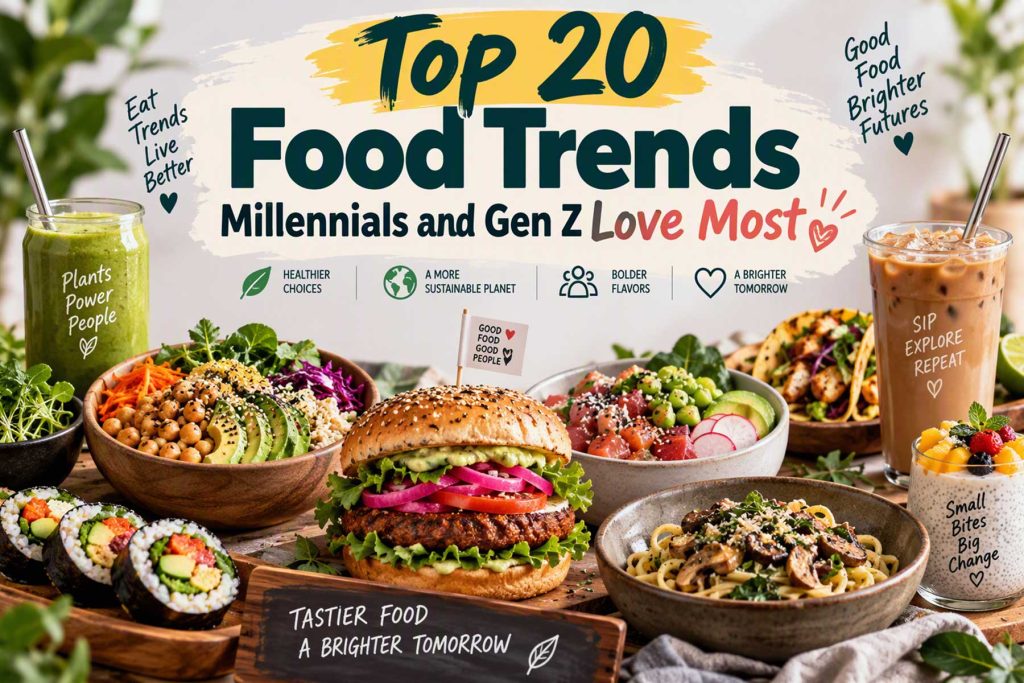
A generation can change the food industry without changing what it eats every day. Millennials and Gen Z have helped make food more social, more visual, more international, more convenient, and increasingly connected to personal identity. A restaurant meal can now double as a social experience, a delivery order, a viral recommendation, or a way to try a cuisine that was unfamiliar a few years earlier.
The numbers show how strong that influence has become. National Restaurant Association research found that 71 percent of Gen Z adults and 68 percent of millennials say they eat a wider variety of global cuisines than they used to. The same research found that 86 percent of Gen Z adults and 84 percent of millennials consider social media a good way to learn about food they have not tried before. NRA
Food preferences among younger adults are also shaped by practical concerns. Protein is highly visible, snacks are replacing some traditional meals, restaurant delivery and takeout remain deeply integrated into younger lifestyles, and value has become more important as food prices remain elevated. The 2025 IFIC Food and Health Survey found that 71 percent of Americans were trying to consume protein, while 70 percent reported snacking at least once a day. IFIC+1
The following Top 20 ranking looks at the food trends with the strongest combination of cultural momentum, menu presence, consumer interest, and relevance among Millennials and Gen Z in the United States.
Top 20 Food Trends Millennials and Gen Z Love Most
1 Global and Cross Cultural Cuisine
Global food is no longer confined to specialty restaurants or major coastal cities. Korean, Vietnamese, Filipino, Caribbean, West African, South American, and other international flavors are increasingly appearing across mainstream American menus.
National Restaurant Association research places Korean and Vietnamese cuisine among the leading food trends, while its consumer research shows that younger adults are particularly likely to report eating a wider variety of global cuisines. Seven in ten Gen Z adults and millennials said their global cuisine consumption had broadened. NRA+1
The appeal goes beyond novelty. Younger diners often encounter food through travel, social media, streaming entertainment, restaurants, food creators, and friends. Korean cuisine provides a strong example because dishes such as Korean fried chicken, bibimbap, bulgogi, kimchi, and Korean barbecue can offer several distinct flavor and dining experiences within one cuisine.
2 Protein Packed Foods
Protein has moved from a fitness focused concern into a mainstream food purchasing priority.
The 2025 IFIC research found that 71 percent of Americans were trying to consume protein, up from 59 percent in 2022. Eight in ten Americans also said they prioritize protein during at least one eating occasion each day. IFIC+1
Among younger consumers, protein appears across breakfast bowls, yogurt, smoothies, snacks, sandwiches, burgers, wraps, and packaged foods. The appeal is partly nutritional, but it is also connected to fitness culture, satiety, convenience, and the popularity of high protein eating patterns.
Restaurants have responded by adding protein focused bowls, chicken based meals, steak dishes, eggs, Greek yogurt, cottage cheese, and protein enhanced beverages. The National Restaurant Association’s 2026 culinary forecast specifically identifies protein boosted foods as part of the growing combination of health, wellness, and value. NRA
3 Matcha
Matcha has evolved from a specialty tea into a major American beverage and dessert ingredient.
Its distinctive green color makes it highly recognizable in photographs and short form video, while its flavor works across lattes, iced drinks, smoothies, soft serve, pastries, and desserts. The National Restaurant Association’s 2025 culinary forecast ranked matcha among its leading flavor and condiment trends. NRA
Younger consumers have also helped push matcha beyond traditional tea settings. Matcha can be positioned as a cafe ritual, a visual experience, or an alternative to conventional coffee. That flexibility has made it particularly compatible with the way Gen Z and millennials consume food and beverage content online.
4 Hot Honey and Sweet Heat
The combination of sweetness and heat has become one of the most recognizable flavor directions in contemporary American food.
Hot honey works because it is versatile. It can be drizzled over pizza, fried chicken, sandwiches, vegetables, cheese, biscuits, and desserts. The National Restaurant Association ranked hot honey among the top overall food trends and placed it first among its leading flavors and condiments for 2025. NRA+1
The broader trend is sweet heat. Consumers are seeing combinations such as spicy maple, chili fruit sauces, Tajin style seasonings, and sweet spicy beverages. The flavor profile gives familiar foods a new identity without requiring consumers to learn an entirely new dish.
5 Fermented and Pickled Foods
Kimchi, pickles, miso, kombucha, fermented sauces, and other preserved foods have moved closer to the center of American food culture.
Fermentation brings strong flavors, acidity, texture, and complexity. Those characteristics work particularly well with the bold food preferences associated with younger diners.
The National Restaurant Association ranked fermented and pickled foods among the leading food trends for 2025. Its culinary forecast also highlighted Korean, Vietnamese, and Filipino cuisines, all of which use fermentation or preservation techniques in important dishes. NRA+1
Pickles have also become a social media friendly ingredient, appearing in sandwiches, fried snacks, sauces, beverages, and even unusual dessert combinations.
6 Creative Coffee and Cold Brew
Coffee has become more than a morning necessity for younger Americans. It is increasingly a customizable food and beverage category.
Cold brew was one of the National Restaurant Association’s top overall restaurant trends for 2025. Its smooth flavor, chilled format, and compatibility with milk, syrups, spices, and other ingredients make it easy to personalize. NRA
Younger consumers also tend to treat coffee shops as social spaces and work environments. That gives beverage purchases a lifestyle component that extends beyond caffeine.
The continued popularity of specialty coffee also supports a wider trend toward beverages that look distinctive, taste different from standard coffee, and provide an experience worth sharing.
7 Snack Based Eating
Traditional breakfast, lunch, and dinner are no longer the only organizing principles for American eating.
IFIC’s 2025 Food and Health Survey found that seven in ten Americans snack at least once a day. Six in ten also reported replacing traditional meals with snacks or smaller meals, a substantial increase from 2020. IFIC
Gen Z has shown particularly strong interest in snacking. Earlier IFIC research found that 77 percent of Gen Z respondents reported snacking at least once a day, with 34 percent saying they snack twice a day. IFIC
This helps explain the popularity of protein bars, popcorn, chips, yogurt, fruit snacks, energy bites, packaged nuts, specialty crackers, and restaurant snack menus. Small portions fit flexible schedules and allow consumers to mix several flavors or foods throughout the day.
8 Korean Food
Korean cuisine deserves its own place because its influence extends beyond the broader global food trend.
Korean barbecue, Korean fried chicken, kimchi, gochujang, bulgogi, bibimbap, and other dishes have gained visibility across American restaurant menus. The National Restaurant Association ranked Korean cuisine third among its top overall food trends for 2025. NRA
Korean food also benefits from the growing popularity of fermented ingredients, spicy flavors, shared dining, grilled meats, and visually distinctive dishes.
Entertainment has played a cultural role as well. Korean music, television, film, beauty, and social media have increased familiarity with Korean culture among American younger adults, creating an environment where food can become another point of connection.
9 Vietnamese Food
Vietnamese cuisine combines several qualities that resonate with younger American diners: fresh herbs, acidity, texture, vegetables, noodles, grilled proteins, and strong but balanced flavors.
The National Restaurant Association ranked Vietnamese cuisine among its top overall food trends for 2025. NRA
Pho remains one of the most recognizable Vietnamese dishes in the United States, but younger consumers are also encountering banh mi, rice bowls, vermicelli dishes, Vietnamese coffee, spring rolls, and regional specialties.
Its growing popularity also reflects the larger movement toward global food that feels flavorful without relying exclusively on heavy sauces or rich ingredients.
10 Low and No Alcohol Beverages
Younger adults are changing the role of beverages at restaurants and social events.
Low alcohol and no alcohol options allow consumers to participate in a social drinking occasion without necessarily choosing a conventional alcoholic beverage. Restaurants and bars are responding with mocktails, sophisticated zero proof drinks, botanical beverages, alcohol free beer, and creative spritzes.
The National Restaurant Association’s 2026 culinary forecast specifically identified low and no alcohol beverages as part of the health, wellness, and value movement. NRA
The category is also becoming more sophisticated. Instead of simply removing alcohol from a traditional cocktail, beverage programs increasingly focus on flavor, presentation, acidity, texture, and distinctive ingredients.
11 Smash Burgers With a Twist
The classic American burger is not disappearing. It is being modified.
Smash burgers have gained attention because the thin patty, crisp edges, toasted bun, sauce, and simple presentation create a highly recognizable format. The National Restaurant Association’s 2026 forecast specifically points to smashed burgers with global personality as an emerging direction. NRA
The modern version can include Korean flavors, spicy sauces, pickles, specialty cheeses, chili oils, or other international ingredients.
That combination of nostalgia and experimentation is central to many younger consumer food preferences. Familiar foods provide comfort while unusual toppings provide something new to talk about and share.
12 Elevated Instant Noodles and Ramen
Instant noodles have moved from being associated primarily with convenience to becoming a canvas for experimentation.
The 2026 National Restaurant Association culinary forecast identifies elevated instant noodles as an emerging menu direction. Restaurants and home cooks can transform basic noodles with eggs, vegetables, proteins, chili oils, fermented ingredients, seafood, and richer broths. NRA
Ramen has also benefited from the broader growth of Japanese and Asian food culture in the United States. For younger consumers, noodles can function as affordable comfort food while still allowing considerable customization.
13 Caribbean and Latin Inspired Bowls
Bowls remain popular because they combine convenience, customization, color, texture, and multiple food groups in one format.
Caribbean inspired bowls can feature rice, beans, plantains, jerk seasoned proteins, vegetables, sauces, and fresh toppings. Latin inspired bowls offer similarly flexible combinations using ingredients such as grilled meats, beans, corn, salsa, avocado, rice, and peppers.
The 2026 National Restaurant Association forecast specifically highlights Caribbean curry bowls as part of the coming menu direction. NRA
For younger diners, bowls also work well for delivery and takeout because ingredients can be portioned separately while still creating a complete meal.
14 Plant Forward Meals
Plant forward eating has become broader than the earlier idea of replacing every animal product with a direct substitute.
Many younger consumers are interested in vegetables, beans, mushrooms, grains, legumes, and other plant foods without necessarily following a fully plant based diet. This creates room for dishes that place vegetables at the center while allowing other ingredients around them.
The National Restaurant Association has repeatedly identified veggie centered cuisine, plant based foods, and locally sourced ingredients as meaningful restaurant trends. NRA
Mushrooms are particularly useful in this category because their texture and umami qualities can work in burgers, tacos, sandwiches, pasta, and bowls.
15 Global Breakfast Foods
Breakfast is becoming more internationally varied.
Instead of limiting the first meal of the day to cereal, eggs, pancakes, or toast, younger diners are increasingly exposed to breakfast dishes from different cultures. Examples include Japanese style rice breakfasts, Vietnamese coffee, Filipino breakfast plates, shakshuka, savory oatmeal, breakfast tacos, and globally inspired pastries.
The National Restaurant Association has previously identified globally inspired breakfast foods as a significant restaurant trend. NRA
The shift reflects a larger change in how younger Americans think about meal categories. Foods do not necessarily have to belong to a traditional American breakfast format to be considered breakfast.
16 Creative Sodas and Playful Drinks
The beverage category has become increasingly experimental, especially among younger consumers.
Dirty sodas, flavored sparkling drinks, fruit based refreshers, boba beverages, specialty lemonades, and drinks with layered textures are appearing across restaurant and retail settings.
At the 2025 National Restaurant Association Show, dirty sodas featuring syrups, creams, popping boba, and other additions received significant attention. Ube also appeared in beverages, including combinations with matcha and milk. NRA
The attraction is partly sensory. Color, texture, sweetness, carbonation, and customization create beverages that can become social media content as well as refreshments.
17 Ube and Other Distinctive Flavors
Ube has become one of the most recognizable examples of a once niche flavor entering mainstream American food culture.
The purple yam is used in desserts, ice cream, pastries, beverages, cakes, and specialty drinks. Its naturally vivid color gives it an advantage in a highly visual food environment.
Ube also fits the larger movement toward Filipino food and Southeast Asian flavors. The National Restaurant Association has identified Filipino cuisine as one of the major global food directions gaining attention among American diners. NRA
Other distinctive flavors are following similar paths, particularly when they have a clear visual identity and can be used across several menu categories.
18 Convenience Foods With Better Quality
Convenience no longer automatically means sacrificing flavor or ingredient quality.
Younger consumers are showing strong interest in foods that reduce preparation time while still feeling fresh, customizable, and distinctive. Meal kits, restaurant prepared foods, premium frozen products, ready to eat snacks, and packaged sauces all fit this category.
National Restaurant Association research found that 74 percent of Gen Z adults and 69 percent of millennials were more likely than previously to combine restaurant prepared items with home prepared meals. It also found that 77 percent of Gen Z adults and 75 percent of millennials would be likely to purchase packaged food or beverage items from a favorite restaurant. NRA
This creates an important commercial opportunity. The restaurant is no longer limited to selling a finished meal. Its sauces, prepared ingredients, frozen products, and other branded foods can become part of the home kitchen.
19 Value Meals and Affordable Indulgence
Younger consumers love food trends, but price still matters.
The National Restaurant Association reports that value offers such as discounts, limited time promotions, and buy one get one deals resonate with about eight in ten off premises customers. Younger adults are particularly active in takeout, delivery, and other restaurant formats. NRA
That has helped create a category of affordable indulgence. Consumers may choose a premium coffee, specialty burger, dessert, or restaurant meal while saving money elsewhere.
The idea is not necessarily the cheapest possible food. It is the feeling that the purchase provides enough enjoyment, convenience, quantity, or experience to justify its price.
20 Food That Looks as Good as It Tastes
Visual appeal has become a serious part of food discovery.
National Restaurant Association research found that 86 percent of Gen Z adults and 84 percent of millennials consider social media a good way to learn about food they have not tried before. The same research found that 84 percent of millennials and 83 percent of Gen Z adults see social media as a useful way to learn about nearby restaurants. NRA
That environment rewards food with recognizable visual characteristics. Bright sauces, colorful drinks, dramatic desserts, layered beverages, distinctive plating, oversized portions, and unusual ingredients can attract attention before a consumer has tasted anything.
The important point is that visual appeal works best when the food itself delivers. Younger consumers may be introduced to a dish through a photograph or video, but repeat demand depends on flavor, price, convenience, and the overall dining experience.
What These Food Trends Have in Common
The 20 trends above may appear unrelated. Matcha and Korean barbecue occupy very different parts of the menu, while protein snacks and global breakfast foods solve different consumer needs. Yet several common forces connect them.
The first is variety. Younger consumers are increasingly comfortable moving between cuisines and formats. Seven in ten Gen Z adults and millennials reported eating a wider variety of global cuisines than they used to. NRA
The second is personalization. Bowls, beverages, coffee, burgers, noodles, snacks, and even restaurant prepared foods can be modified according to taste, dietary preferences, budget, and occasion.
The third is convenience. Takeout and delivery have become particularly important among younger Americans. National Restaurant Association research found that more than six in ten younger adults use takeout, drive through, and delivery more often than they did a year earlier. NRA
The fourth is social visibility. Food has become part of the content economy. A dish can spread because it tastes good, but also because it photographs well, tells a cultural story, looks unusual, or gives consumers something worth sharing.
The Data Behind Millennial and Gen Z Food Culture
The strongest evidence suggests that younger consumers are not simply chasing novelty. Their choices reflect several competing priorities.
| Rank | Food trend | Main appeal | Why younger consumers respond |
| 1 | Global cuisine | Variety | Broader exposure to international flavors |
| 2 | Protein rich foods | Nutrition and satiety | Strong wellness and fitness interest |
| 3 | Matcha | Flavor and identity | Beverage culture and visual appeal |
| 4 | Hot honey | Sweet heat | Easy way to transform familiar foods |
| 5 | Fermented foods | Flavor and tradition | Strong connection to global cuisine |
| 6 | Creative coffee | Customization | Lifestyle and cafe culture |
| 7 | Snack based eating | Convenience | Flexible schedules and smaller meals |
| 8 | Korean food | Bold flavor | Global culture and social appeal |
| 9 | Vietnamese food | Freshness and flavor | Balanced global cuisine |
| 10 | Low and no alcohol | Social flexibility | Expanding beverage choices |
| 11 | Smash burgers | Comfort | Familiar food with new flavors |
| 12 | Elevated noodles | Convenience | Affordable customization |
| 13 | Caribbean bowls | Variety | Flavorful customizable meals |
| 14 | Plant forward foods | Variety and wellness | Flexible approach to plant foods |
| 15 | Global breakfasts | Variety | Less rigid meal traditions |
| 16 | Creative sodas | Fun | Customization and visual appeal |
| 17 | Ube | Novelty | Distinctive color and Filipino influence |
| 18 | Better convenience foods | Time savings | Practicality without giving up quality |
| 19 | Value meals | Affordability | Restaurant interest under budget pressure |
| 20 | Visual food | Social appeal | Strong connection to digital discovery |
Why Social Media Matters So Much
Food trends now have an unusually short path from a restaurant kitchen to millions of potential consumers.
The National Restaurant Association found that three quarters of adults consider social media a useful way to learn about nearby restaurants and foods they have not tried before. Among Gen Z adults, that figure reaches 86 percent for learning about unfamiliar food. Among millennials, it reaches 84 percent. NRA
That changes how a trend develops.
A dish can begin in a local restaurant, appear in a creator’s video, spread through short form content, receive coverage from food publications, and eventually appear as a packaged grocery product. A successful food trend therefore has multiple lives: restaurant dish, social media content, home recipe, retail product, and cultural reference.
This helps explain why visually distinctive foods such as matcha drinks, ube desserts, loaded beverages, colorful bowls, and dramatic desserts can move quickly through the market.
Health and Indulgence Are Not Opposites
One of the more interesting aspects of Millennial and Gen Z food culture is the ability to combine health focused eating with indulgence.
A consumer may prioritize protein at breakfast, order a vegetable rich bowl for lunch, drink a specialty coffee in the afternoon, and choose a smash burger or dessert at dinner. The pattern does not necessarily fit a single dietary identity.
IFIC data shows that protein is currently one of the strongest food priorities among Americans, while daily snacking is also deeply established. IFIC+1
The National Restaurant Association’s 2026 forecast reflects the same tension by grouping health, wellness, value, comfort, and indulgence within the major forces influencing menus. NRA
That combination is likely to remain important because younger consumers tend to judge food through several criteria at once. Taste matters. Price matters. Convenience matters. Health can matter. Cultural interest matters. The winning products often satisfy several of those needs simultaneously.
What Restaurants Can Learn From These Trends
Restaurants targeting Millennials and Gen Z do not necessarily need to adopt every viral ingredient.
The more useful lesson is to understand the characteristics behind the trends. Younger consumers respond to food that provides strong flavor, clear value, convenient ordering, customization, cultural relevance, and a memorable experience.
The National Restaurant Association’s off premises research found that speed, customer service, intuitive ordering technology, value offers, and loyalty programs are important requirements for repeat business. NRA
Packaging also matters. Ninety percent of off premises customers said they would be likely to order a wider variety of food if improved packaging helped maintain temperature, taste, and quality. More than half of Gen Z and millennial consumers said they would pay extra for packaging that preserved food quality. NRA
The implication is straightforward. A trend may generate the first order, but execution determines whether the customer comes back.
Where Millennial and Gen Z Food Preferences Are Going
The next generation of food trends is likely to combine several existing movements rather than replace them.
Global flavors will continue to influence familiar American foods. Protein will appear in more categories. Beverages will become increasingly sophisticated. Snacks will continue to occupy space between traditional meals. Restaurants will sell more packaged products. Value will remain important. Digital media will continue to influence which dishes gain attention.
The most durable trends will probably be those that solve an actual consumer need while also providing something memorable. A protein rich breakfast solves a practical need. A matcha drink provides flavor and identity. A Korean burger combines familiarity with global influence. A value meal addresses price pressure. A visually striking dessert creates a shareable experience.
That combination of utility and enjoyment is what gives a food trend staying power.
Closing Perspective
Millennial and Gen Z food preferences are not defined by one ingredient, one diet, or one viral dish. They reflect a broader shift toward food that is flavorful, flexible, culturally diverse, convenient, visually distinctive, and worth the money. The strongest trends combine several of those qualities at once, which is why global cuisine can grow alongside protein focused eating, why nostalgic burgers can coexist with fermented foods, and why a simple beverage can become a major cultural product. The U.S. food market is increasingly shaped by consumers who want familiar foods presented in new ways and unfamiliar foods made accessible through restaurants, social media, delivery platforms, and retail products. For restaurants and food brands, the opportunity is not simply to copy the latest trend. It is to understand why younger consumers respond to it, then build products that deliver genuine flavor, value, convenience, and a reason to return.
FAQ
What food trends are most popular with Gen Z and millennials?
Global cuisine, protein rich foods, matcha, hot honey, fermented foods, creative coffee, snacks, Korean food, Vietnamese food, and low alcohol beverages are among the strongest current trends. Their popularity reflects a combination of flavor, convenience, health interest, cultural exposure, and social media visibility.
Why does Gen Z love global food trends?
Gen Z has broad exposure to international food through restaurants, social media, travel, entertainment, and online creators. National Restaurant Association research found that 71 percent of Gen Z adults say they eat a wider variety of global cuisines now than they used to. NRA
Is protein still a major food trend in 2026?
Yes. Protein remains one of the strongest food priorities among American consumers. IFIC reported that 71 percent of Americans were trying to consume protein in 2025, while eight in ten said they prioritize protein during at least one eating occasion each day. IFIC+1
Why is matcha so popular with younger Americans?
Matcha combines distinctive flavor, recognizable color, customization, and strong cafe culture appeal. It can be served hot or cold and used in drinks, desserts, smoothies, and other foods.
Are Millennials and Gen Z eating more snacks instead of meals?
Snacking has become a major part of American eating behavior. IFIC found that 70 percent of Americans snack at least once a day, while six in ten say they replace traditional meals with snacks or smaller meals. IFIC
Why are Korean and Vietnamese foods becoming more popular in America?
Both cuisines offer bold flavors, distinctive ingredients, fresh components, and recognizable dishes that work well across restaurant formats. National Restaurant Association research has identified Korean and Vietnamese cuisine among the leading restaurant food trends. NRA
What makes hot honey such a successful food trend?
Hot honey combines two familiar flavor profiles, sweetness and heat, in a format that can be used across many dishes. It works on pizza, chicken, vegetables, sandwiches, cheese, and desserts, making it easy for restaurants to add without redesigning an entire menu.
Do Millennials and Gen Z care about restaurant value?
Yes. Price remains important even when younger consumers are enthusiastic about restaurants. National Restaurant Association research found that value promotions such as discounts, limited time offers, and buy one get one deals resonate with about eight in ten off premises customers. NRA
How much does social media influence food trends?
Social media has become a major source of food discovery among younger Americans. Eighty six percent of Gen Z adults and 84 percent of millennials surveyed by the National Restaurant Association said social media is a good way to learn about food they have not tried before. NRA
Which food trends are likely to last beyond 2026?
Trends connected to lasting consumer needs are more likely to remain relevant. Global flavors, protein rich foods, convenient meals, customizable beverages, snack based eating, value focused dining, and improved restaurant takeout are supported by broader changes in consumer behavior rather than short lived novelty alone.

